A saw doesn’t go blunt all at once. It fades, and because you adjust your sawing without noticing, most people are working with a dull saw long before they admit it. These are the signs I look for, two quick tests you can do off the wood, and how I decide when a saw goes back in the vice.
The signs while you’re cutting
- You’re pushing. A sharp backsaw cuts under the weight of its own spine, with your hand doing little more than steering. If you’re leaning on it, the teeth have gone.
- It won’t start. A sharp saw bites the corner of a board on the first light stroke. A dull one skates and jumps, and needs a thumb against the plate to get going.
- It wanders. Dull teeth, or teeth that have dulled unevenly, pull the saw off the line no matter how carefully you start.
- Listen. It sounds different. A sharp saw has a clean, even note. A dull one sounds harsher and you can hear it labouring. Your ears pick this up before your hands do.
- The dust changes. A sharp rip saw throws small curled shavings. A dull one makes fine powder, and in resinous timber the kerf can come out brown and glazed from the friction.
- The cut is rough. On a cross cut saw, dull points stop slicing the fibres and start tearing them, so shoulders come out fuzzy on the far side.
Two tests off the wood
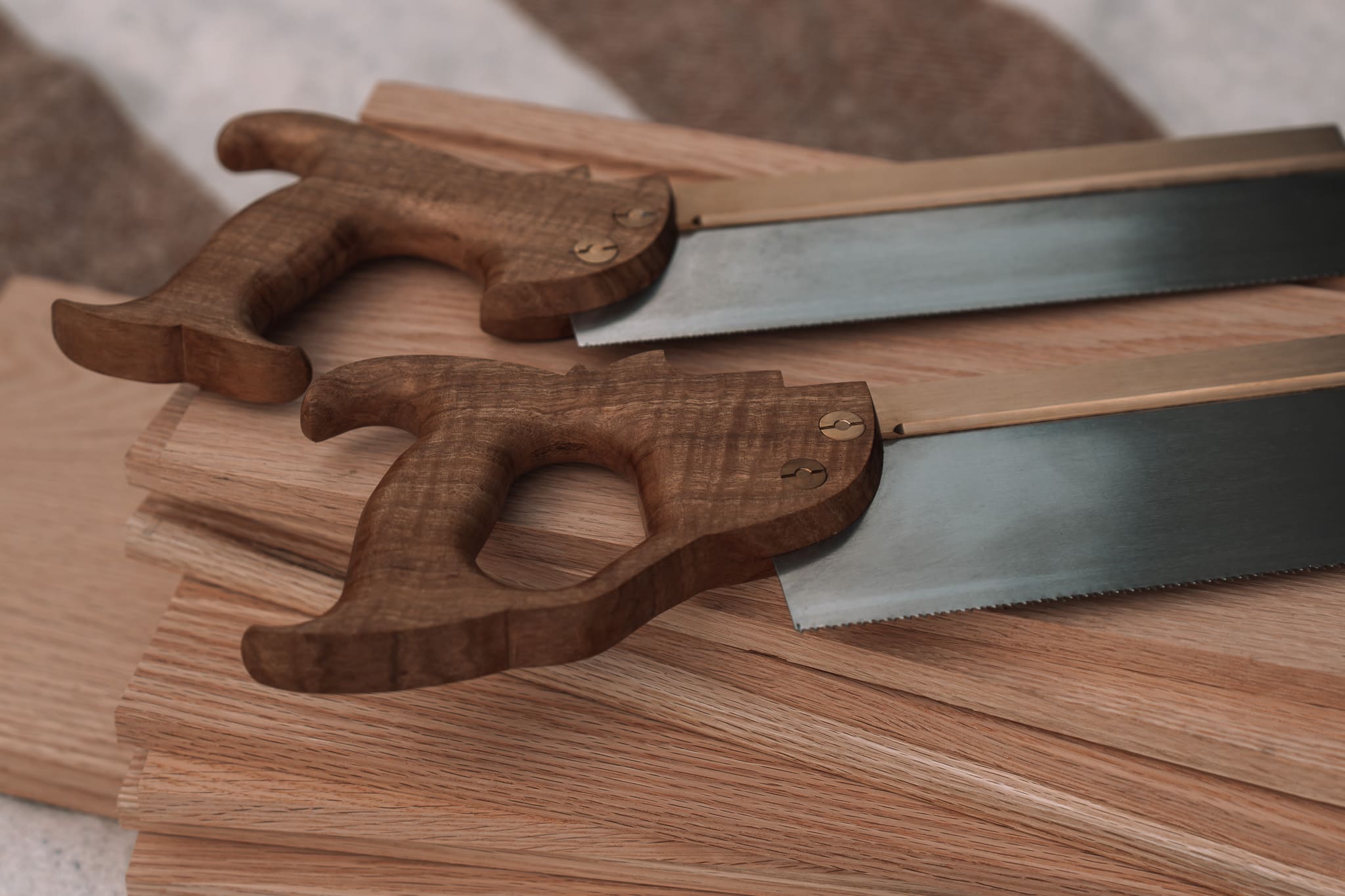
The light test. Hold the saw with the toothline up under a lamp and look along it. A sharp point is too small to reflect light. A dull one has a tiny flat worn on top, and each flat shows as a bright dot. A row of glittering dots along the toothline is a saw that needs filing. It’s the same check I use when sharpening, only in reverse.
The fingernail test. Rest a fingernail lightly against a tooth point and draw it away. A sharp tooth catches, a dull one slides. Try a few teeth from heel to toe, because saws wear unevenly. The middle of the plate usually goes first, since it does most of the work.
It might not be blunt
Before you reach for a file, rule out the other things that feel like a dull saw. Plenty of saws that feel blunt have one of these problems instead.
- Too much set. The saw feels loose in the kerf, wanders and cuts a wide, rough slot. It needs the set reduced, not the teeth filed. Old saws are nearly always over-set.
- Uneven set. The saw pulls to the same side every time. The teeth on one side are bent out further than the other. Fix the set before touching the points.
- A bend in the plate. Sight down the spine. A plate with a wave in it binds no matter how sharp the teeth are.
- Loose split nuts. If the handle moves at all, tighten the nuts gently with the proper notched driver and see whether the dull feeling goes away.
- A dirty plate. Resin build-up drags in the cut. Wipe the plate with a little mineral turps, dry it, and put a thin coat of camellia oil back on.
- The wrong saw for the cut. A cross cut saw ripping a tenon cheek feels blunt when it’s not. There’s a post on rip and cross cut if that sounds familiar.
When to sharpen
Not on a schedule. Go by the symptoms, and go early. Sharp things go blunt with use, hardwoods speed it up, and a quick touch-up with a needle file at the first signs takes a few strokes in each gullet and the saw is back in fifteen minutes. If you wait until it’s properly dull you have to joint the teeth down, reshape them and probably reset them, and you lose an hour and a fair bit of steel from the plate. A saw has only so many sharpenings in it before the plate runs out. Little and often uses far fewer of them.
Australian hardwoods dull a saw faster than pine or the American hardwoods, so if you work Spotted Gum or Jarrah, expect to be at the vice more often.
A new saw
My saws leave sharpened and tested in timber, and a new saw shouldn’t need anything done to it for a good while. When it does, the sharpening post covers the whole job, and the two-day workshops teach it with a file in your hand. A sharpening and retoothing service is on the way as well. And if you can’t tell whether your saw is dull or something else is wrong, send me a photo of the toothline under a lamp and I’ll tell you what I see.