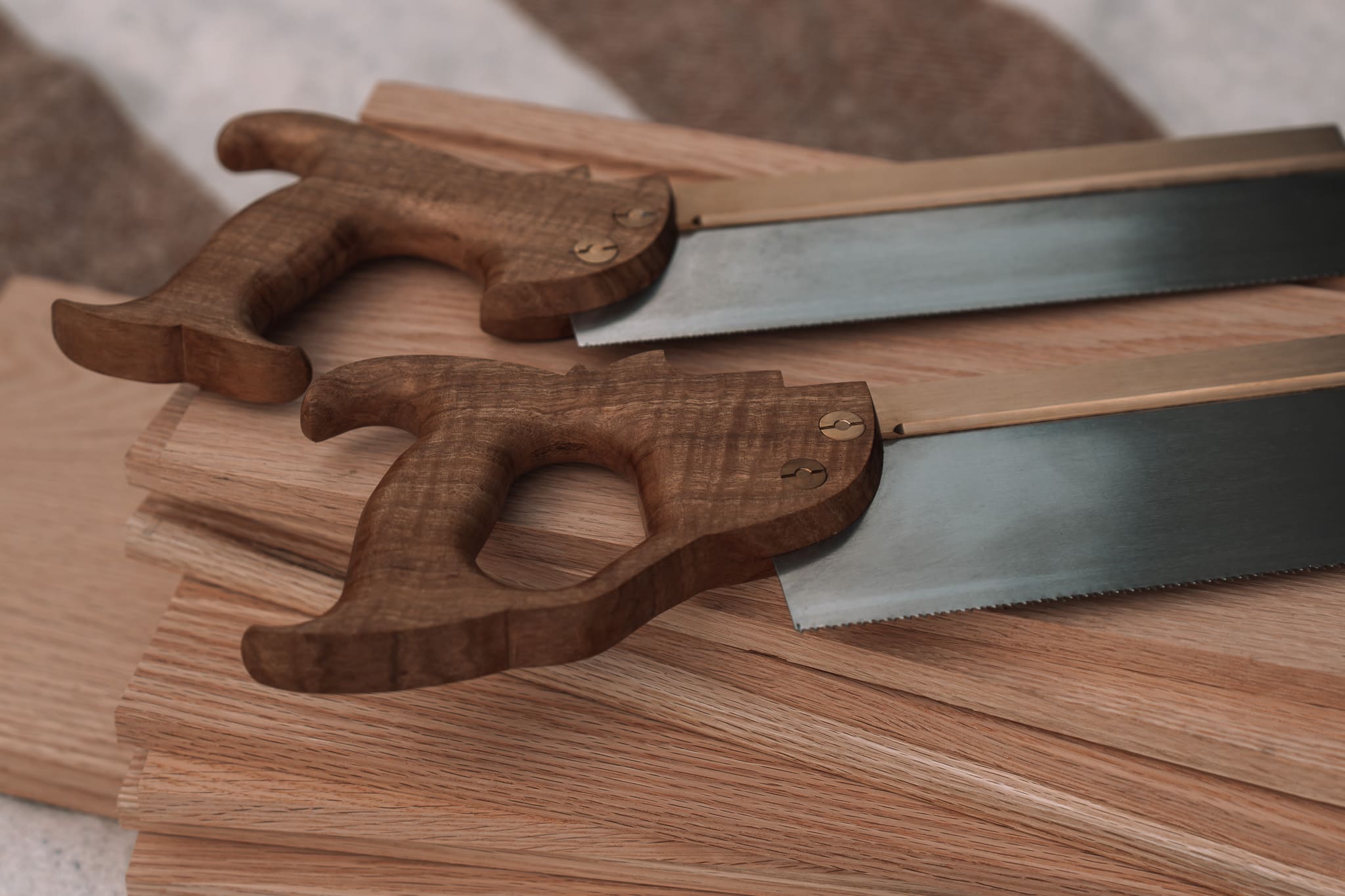
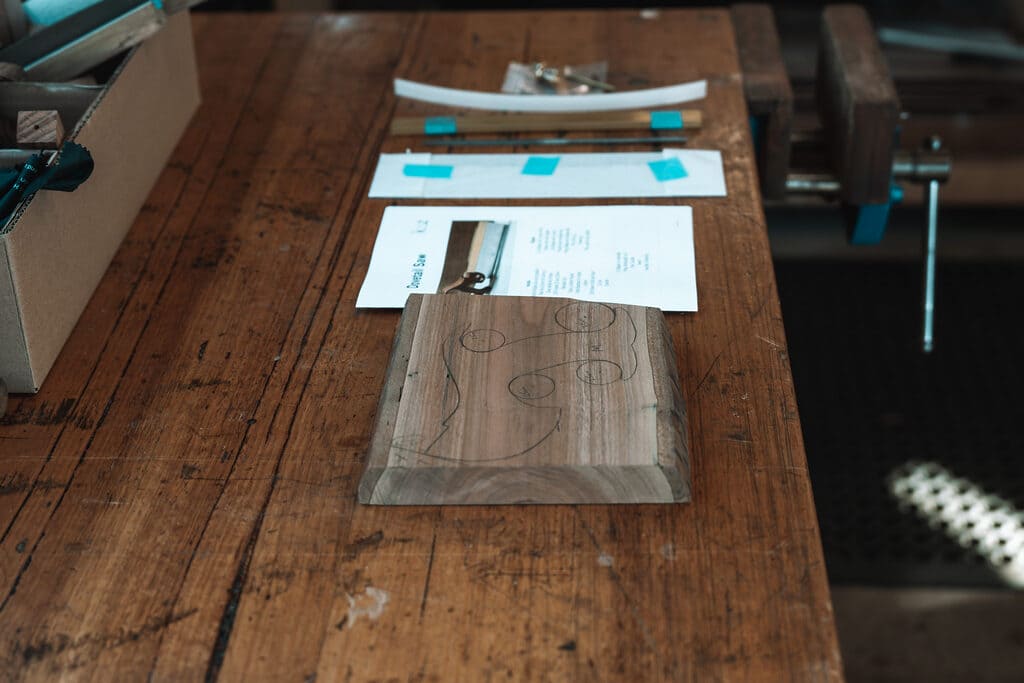
Every saw I make is cut for a hand size: small, medium, large or custom. All I need from you is one number, measured with a ruler held the way you’d hold a saw. Half a minute will do it.
Why the number matters
Most factory saw handles are made for a big hand. If yours is smaller, the grip sits too far from your fingers, so you squeeze harder to keep control. Your hand tires, the saw wanders off the line, and you blame your technique when the handle was the problem all along.
It goes the other way too. A grip that’s too small for a big hand leaves your fingers bunched up and the heel of your palm hanging off the back. Either way you’re fighting the tool. A handle that fits stays put with a loose, relaxed hold, and that’s when sawing gets easy.
What you’re measuring
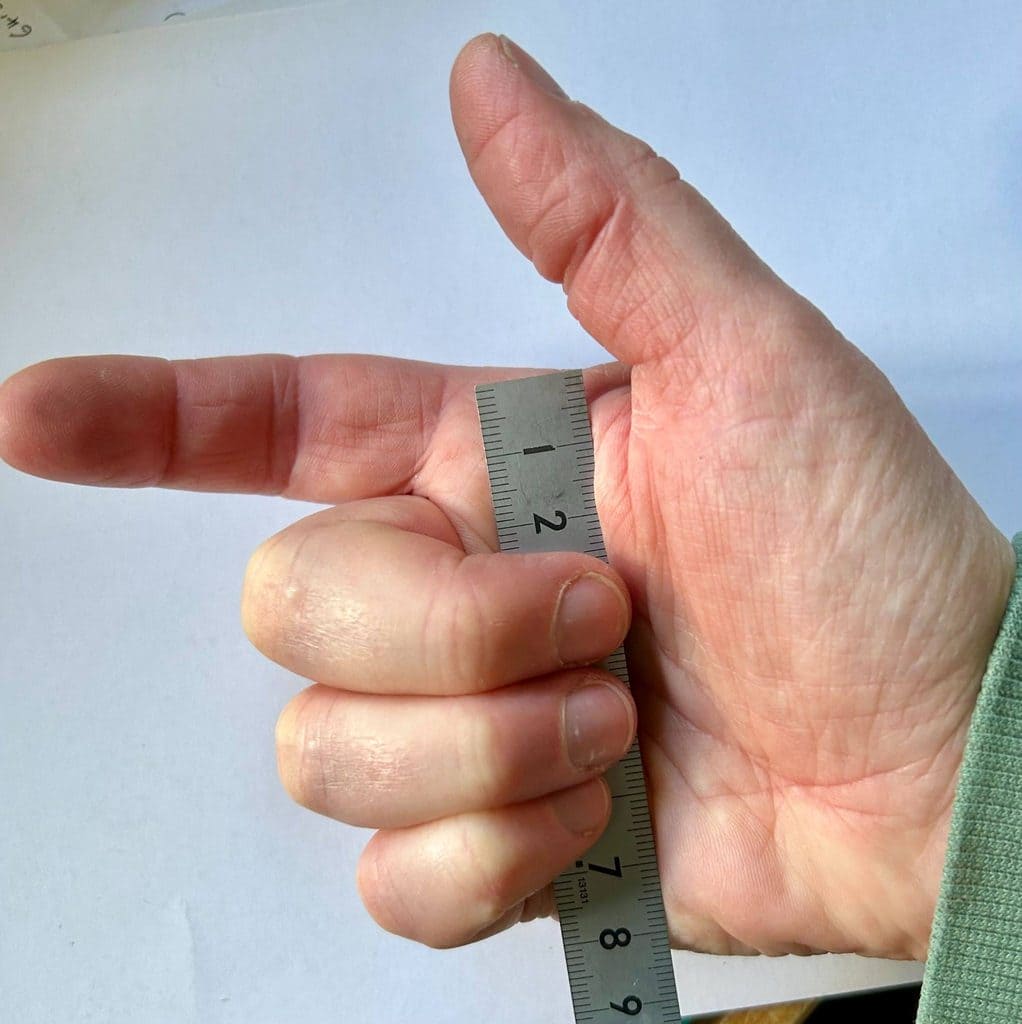
How much handle your hand wraps around. Hold a ruler the way you’d hold a saw and measure from the top of your pointing finger down to the bottom edge of your hand. Leave the thumb out of it.
Measure the hand you saw with. If you’re left handed, measure the left and mention it when you get in touch.
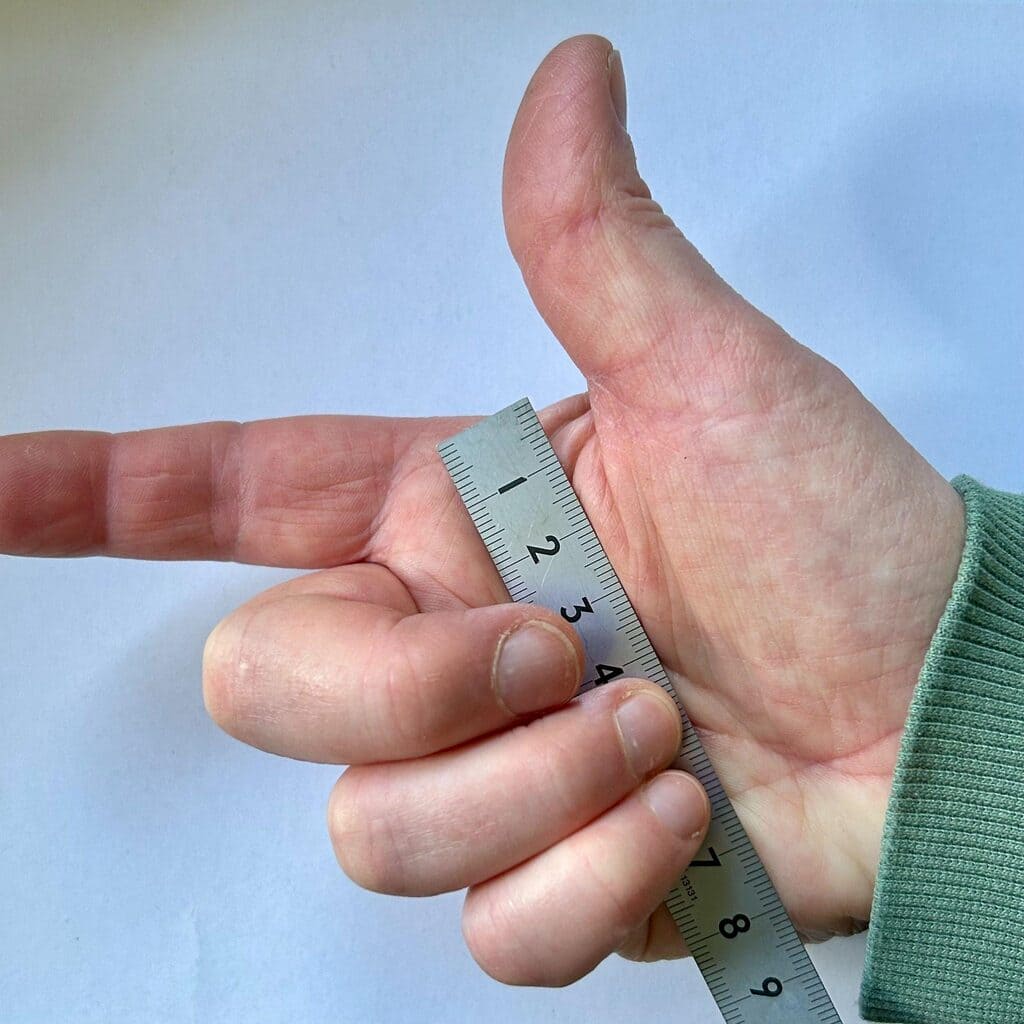
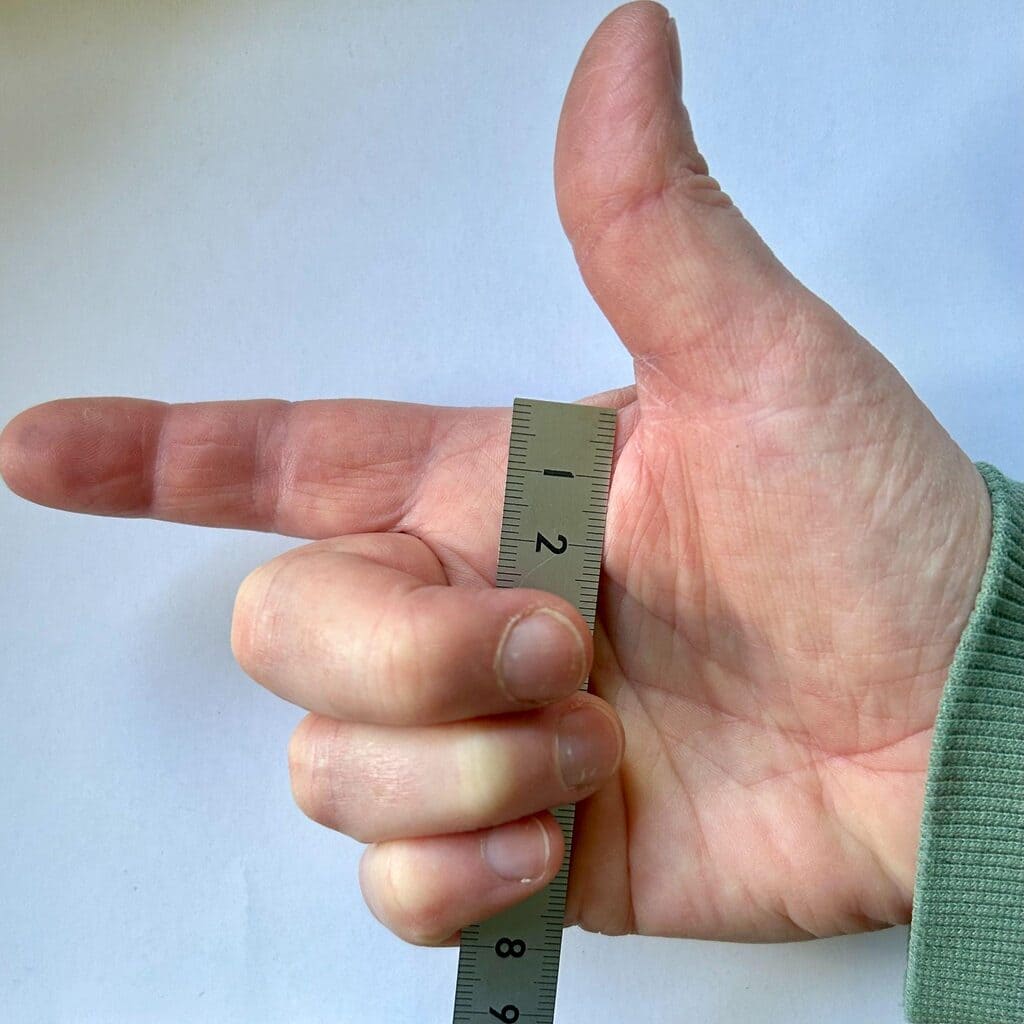
How to measure
- Grab a ruler marked in millimetres. A stiff steel rule is ideal, because it stays straight in your hand.
- Hold your hand the way you would hold a saw: index finger straight out, as if you’re pointing at something, and the other three fingers curled.
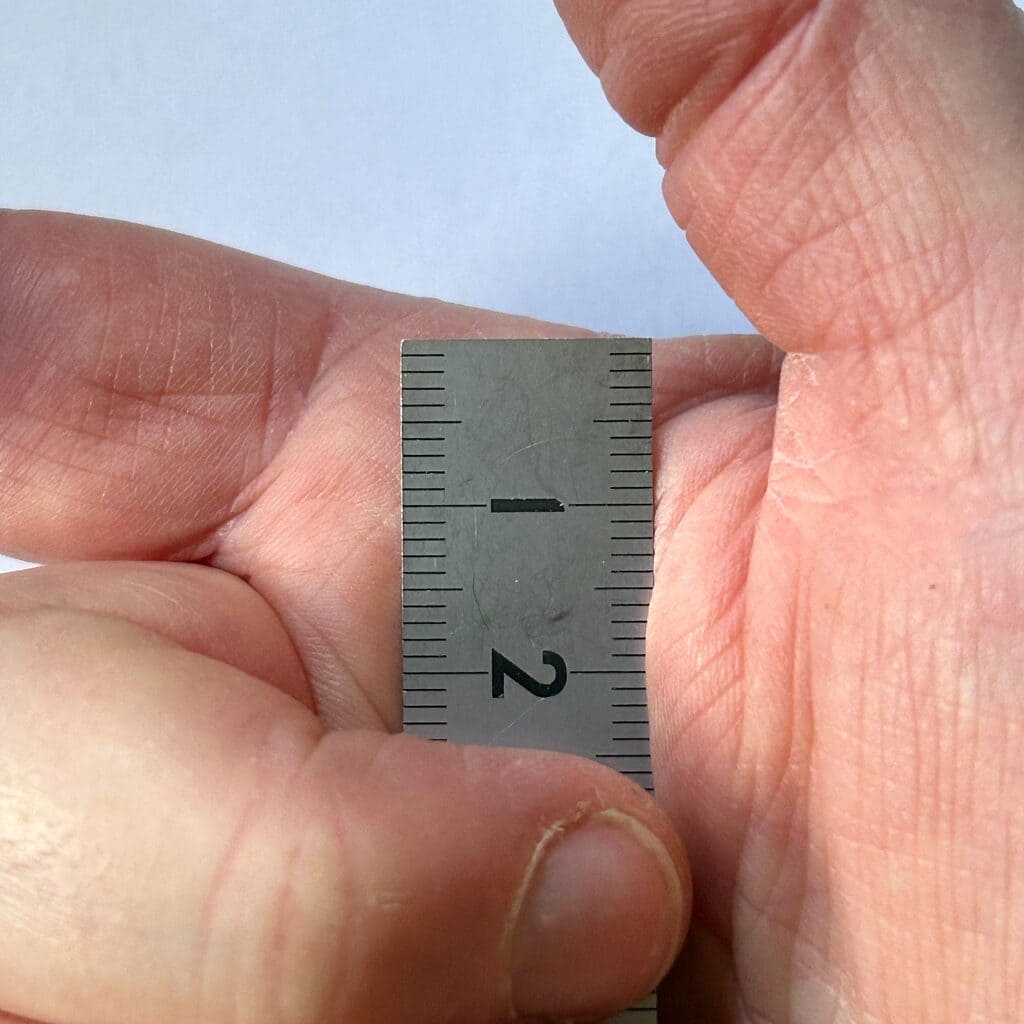
- Slide the ruler into your curled fingers with the zero end at the top, level with the top of your pointing finger.
- Keep the ruler straight up and down, in line with your palm, the way a saw handle sits. Don’t let it lean on an angle.
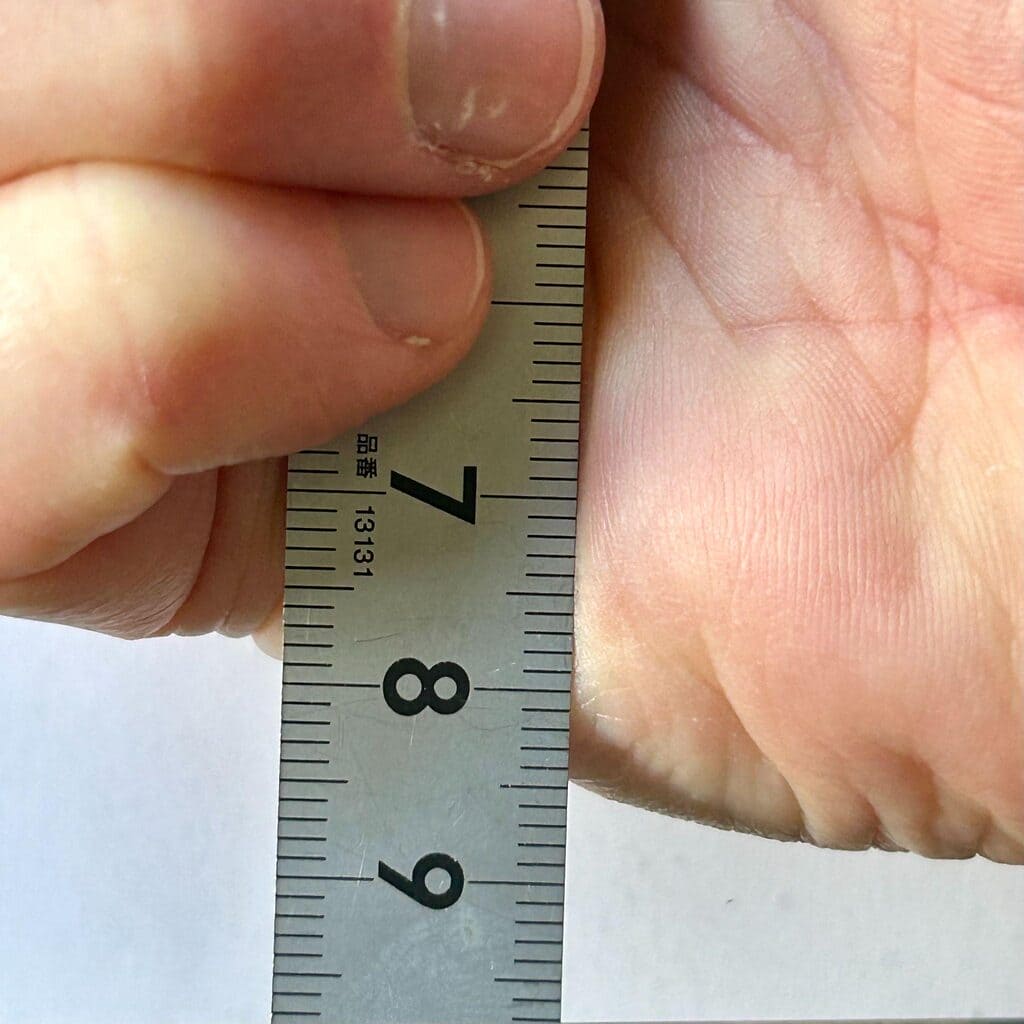
- Read the number at the bottom edge of your hand, just below your little finger. Round to the nearest millimetre.
- Measure twice. If the two readings are a few millimetres apart, take a third and use the middle one.
While the ruler is there, take a photo of your hand with it in place, like the ones above. I ask for that photo before I start any saw, so you may as well take it now.
What your number means
| Your measurement | Handle size |
|---|---|
| Up to about 87mm | Small (cut for 85mm) |
| 88mm to 92mm | Medium (cut for 90mm) |
| 93mm and over | Large (cut for 95mm) |
Those bands have a little give in them. Timber handles are forgiving, and two people with the same measurement can have quite different finger lengths, which changes how a grip feels. If you land on a boundary, go smaller for a snug grip that fills the hand, or larger if you like a bit of room to move. If you’re well outside the bands, or you have long fingers on a narrow palm, that’s what custom is for. Send me the number and the photo and I’ll cut the handle to suit.
If you’d rather try before you decide, there are sample handles in every size to pick up and hold at the workshops.
A second check if you already own a backsaw
Pick up the backsaw you have now. Point your index finger along the spine and curl the other three fingers around the grip, as if you’re pointing at something. If your fingertips curl right around and dig into your palm, the handle is too small. If your little finger is only just hanging on, or slides off the bottom horn while you saw, the grip is too long for your hand. And if you have to squeeze to stop the saw twisting, the handle isn’t filling your hand. A well fitted handle stays put with a loose hold.
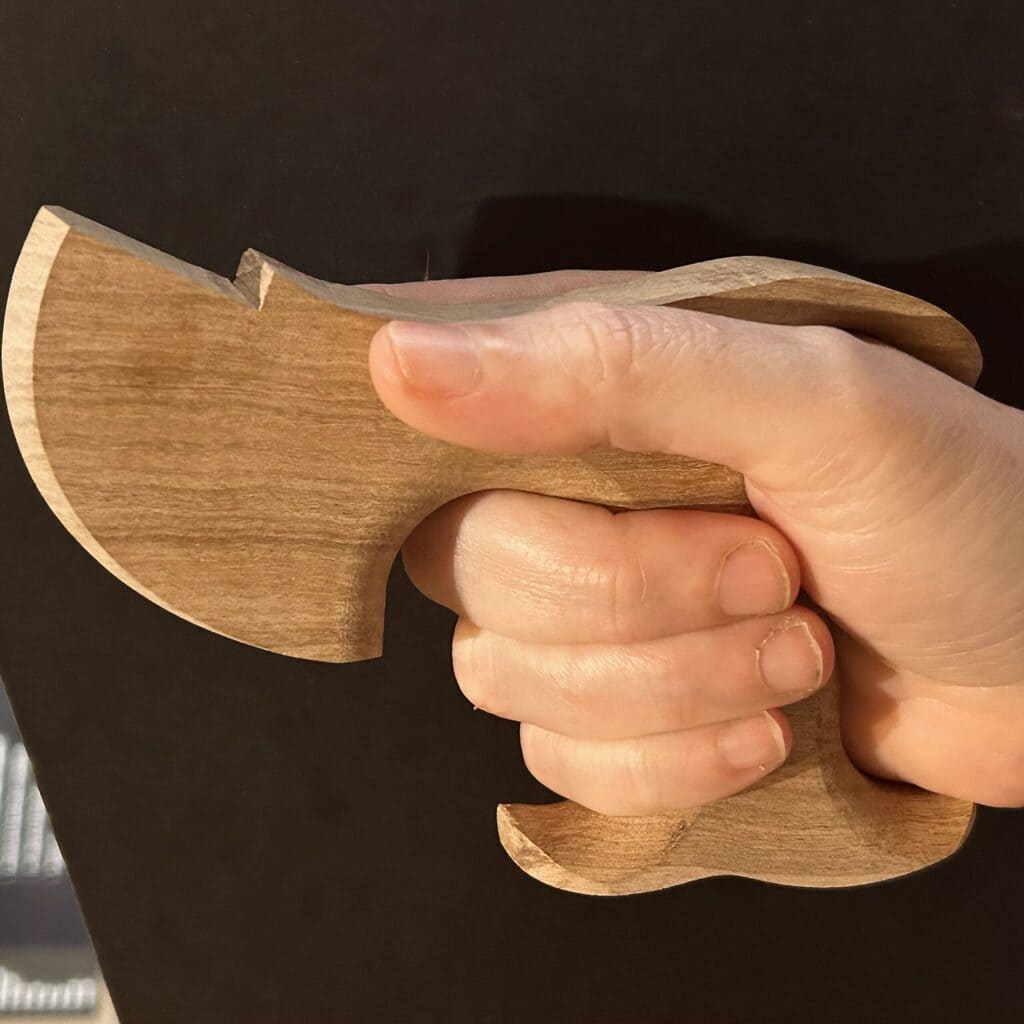
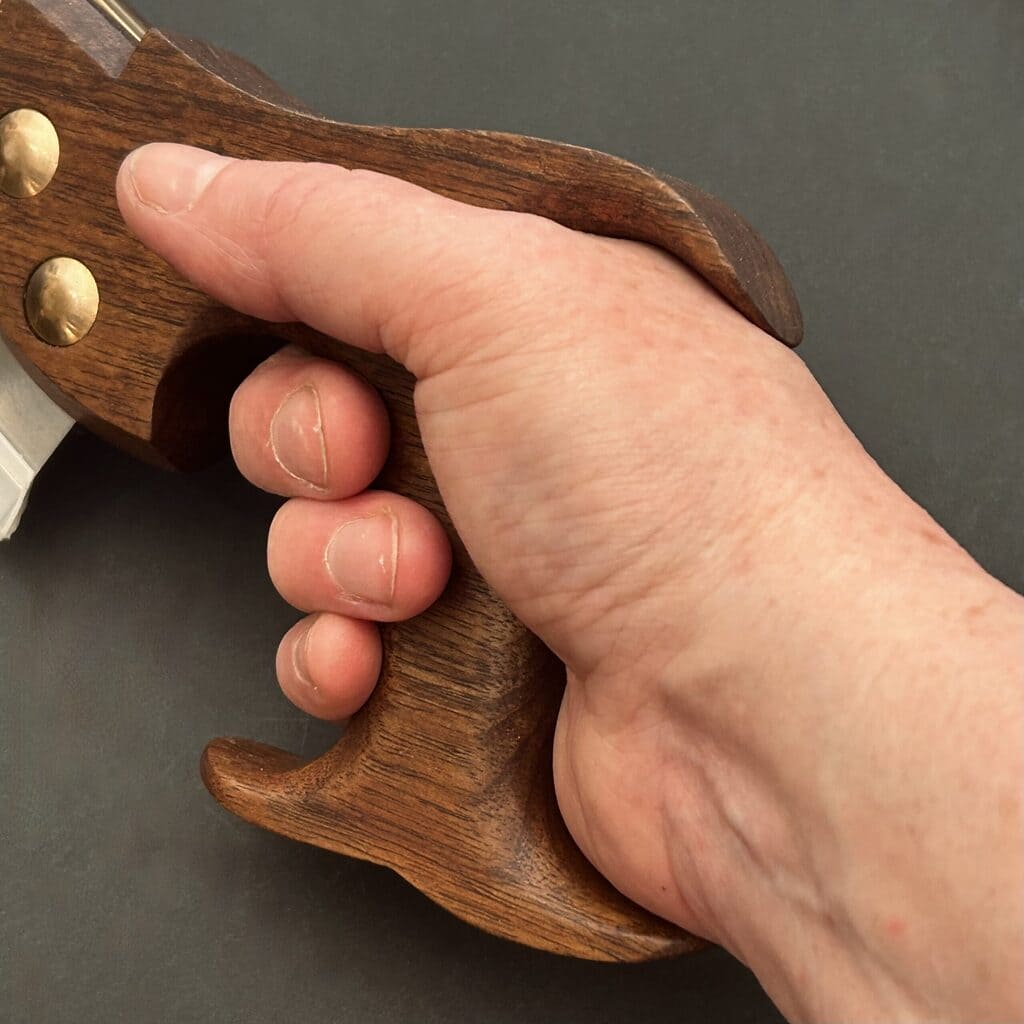
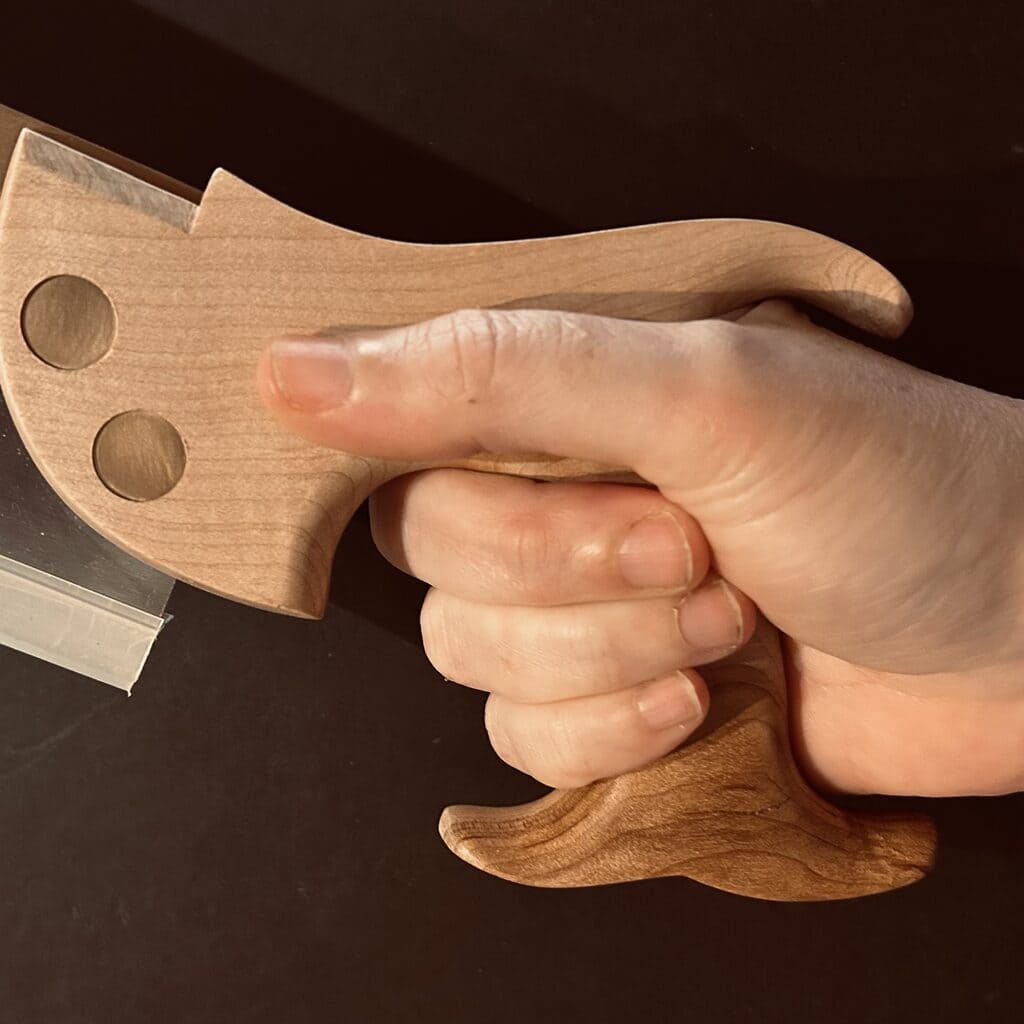
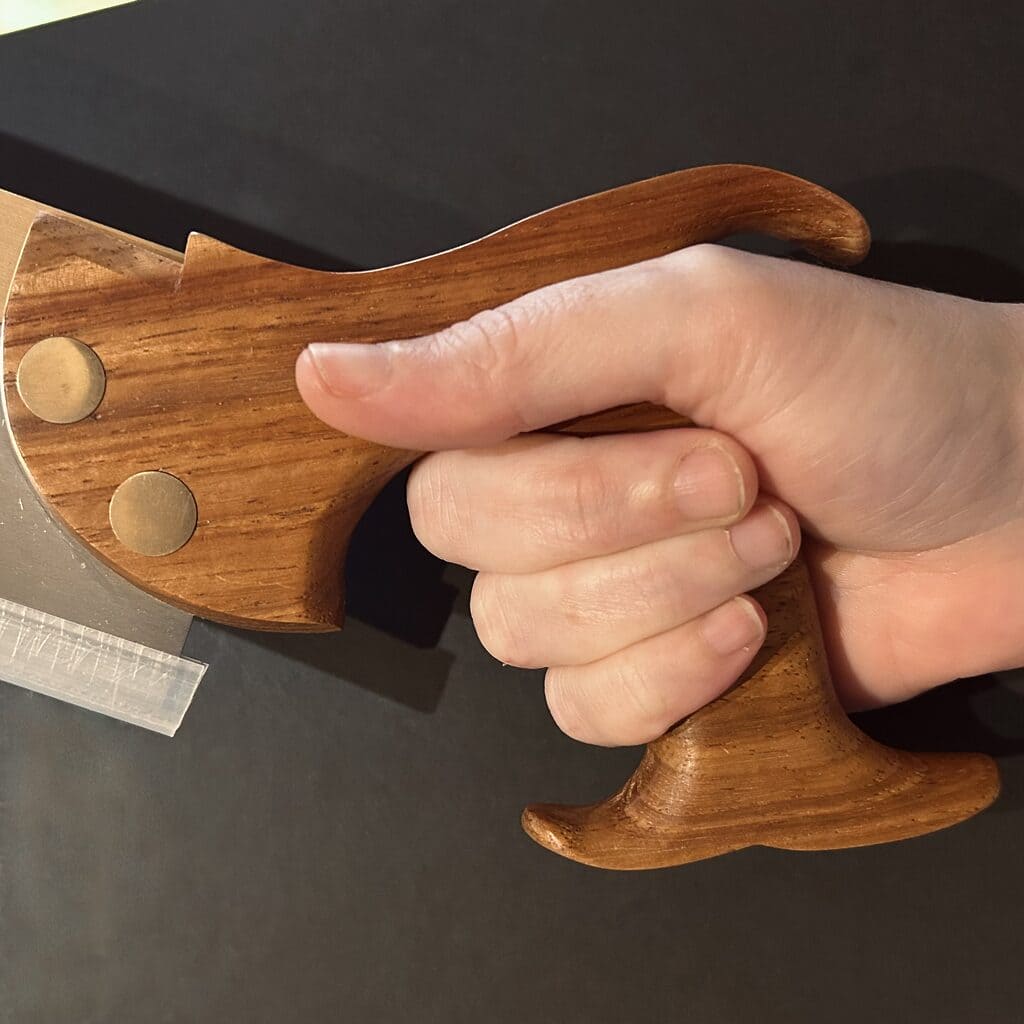
If that describes your saw, measure anyway. The number is still what I work from.
What to do with your number
Each of the saws for sale lists the hand size it was cut for, so you can match your number straight to a saw. For a commission or a custom fit, get in touch with your measurement, the photo, which hand you saw with, and anything else about your grip you think I should know. More detail is always better than less.