
Every saw listing I write says rip cut or cross cut, and it’s the most useful thing to know about a saw before you pick it up. It tells you which way the saw is meant to travel through the grain, and the teeth are filed to suit. Use the wrong one and it still cuts, just slowly or roughly, or both.
Wood is a bundle of straws
Think of a board as a bundle of straws running lengthways. A rip cut runs along the straws, splitting between them. A cross cut runs across them and has to sever each one. Different jobs, different tools.
Ripping is easy on the wood and hard on the saw. The fibres part willingly, so the tooth mainly has to chisel out the material in front of it and clear the dust. Cross cutting is the reverse. The fibres don’t want to be cut across, and unless they’re sliced cleanly they tear, and you get a fuzzy shoulder or a splintered edge on the far side of the board.
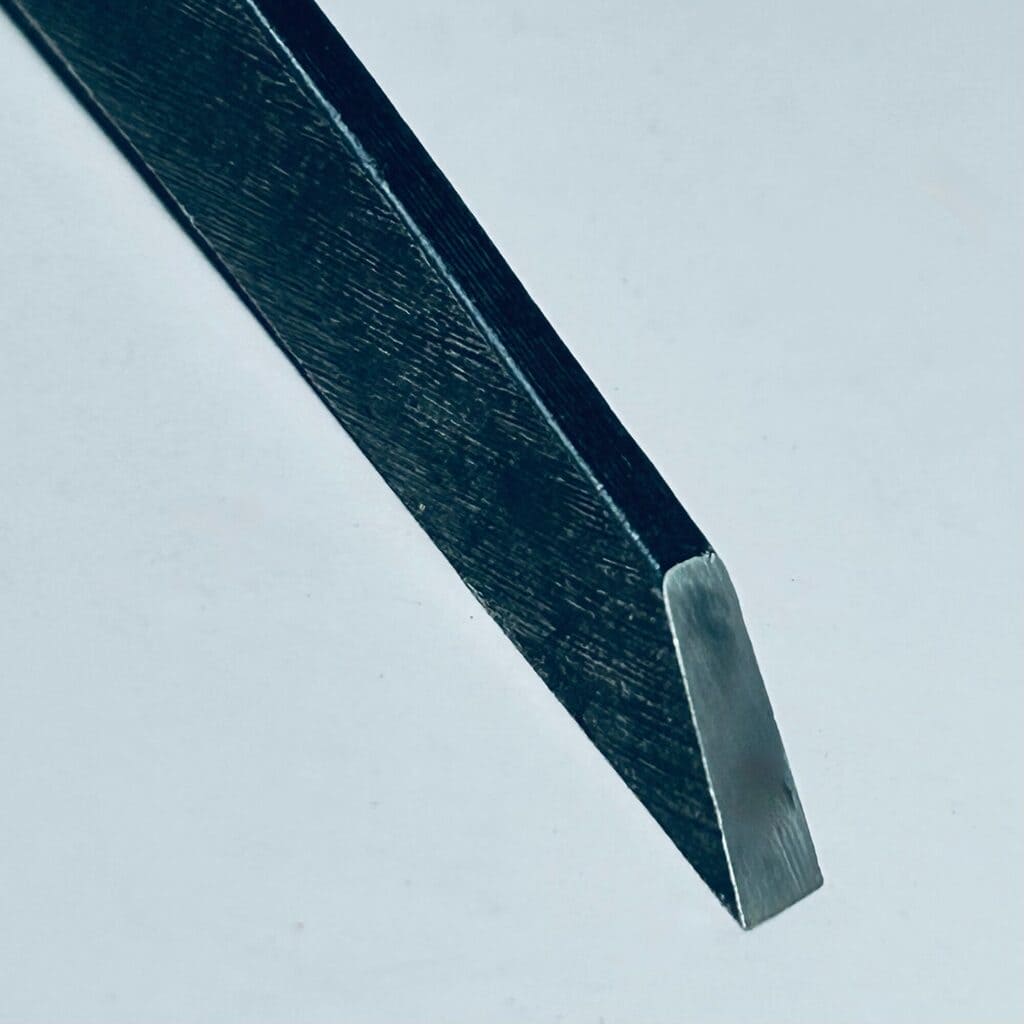
Rip teeth are chisels
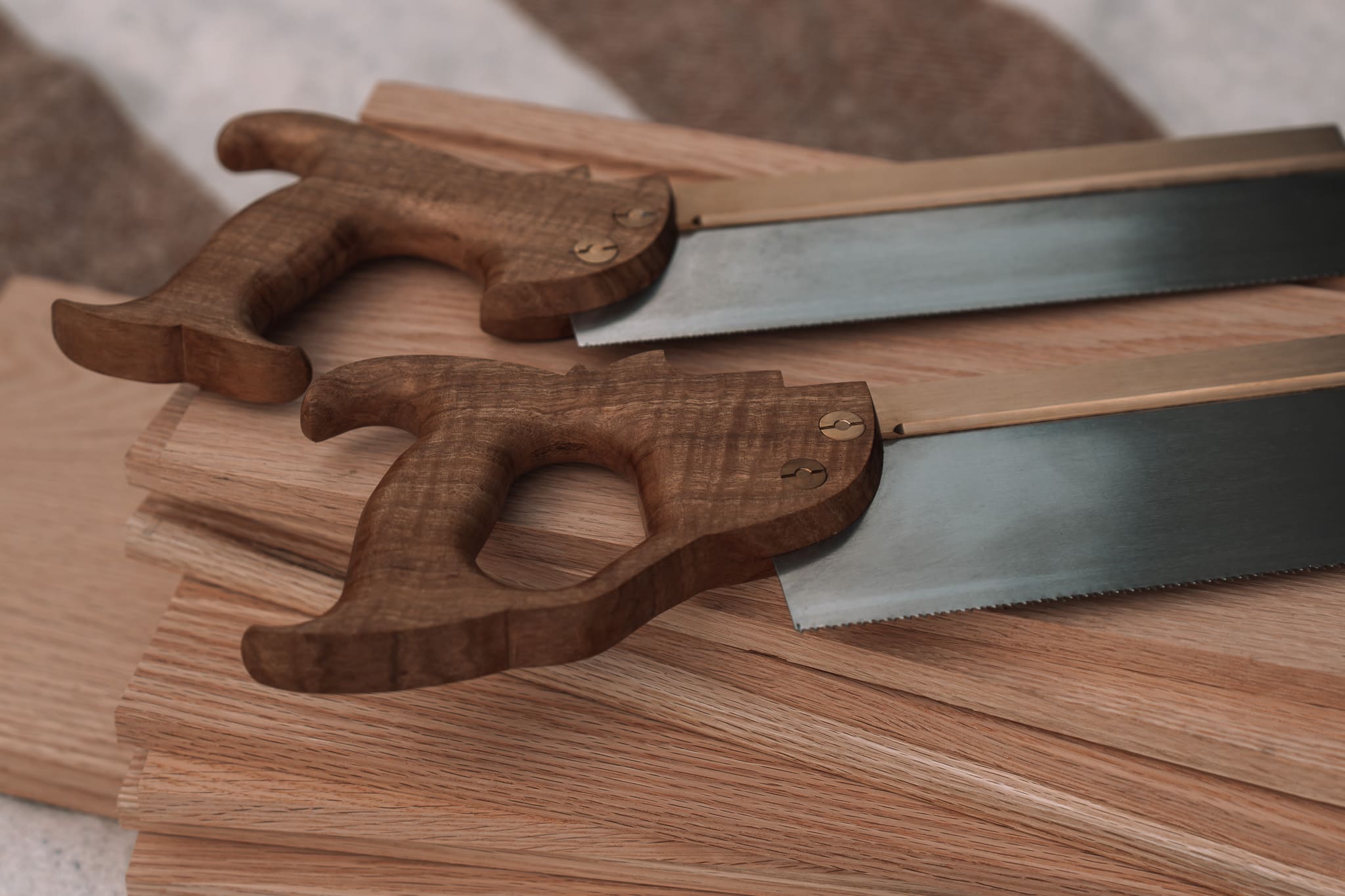
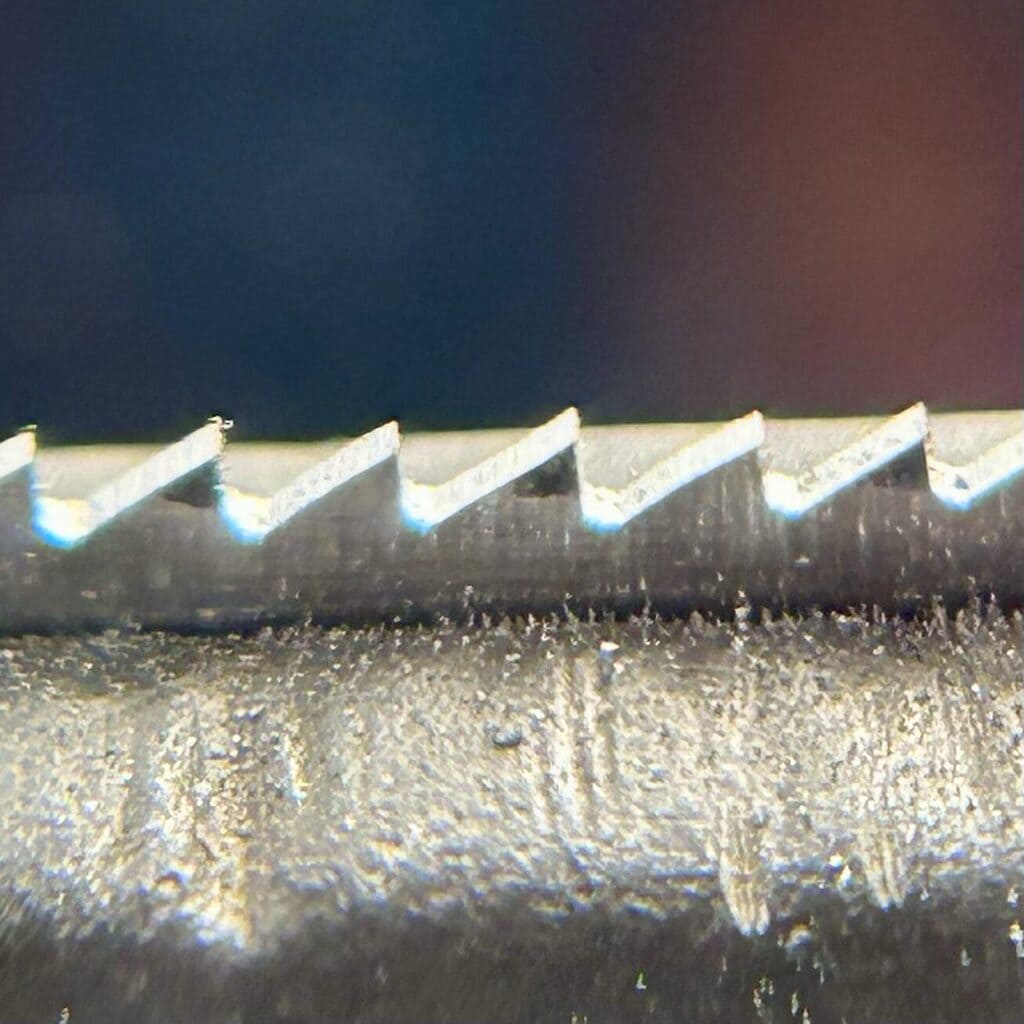
A rip tooth is filed straight across the plate, square to the toothline, so its front face is a small flat chisel. Each tooth takes a shaving out of the end of the kerf, like a chisel pushed along the grain. Rip teeth stand fairly upright because the wood gives way easily. On my dovetail saws the rake is 8 degrees, upright enough to cut fast but relaxed enough to start without grabbing. Dovetails are cut along the grain, so dovetail saws are rip saws.
Cross cut teeth are knives
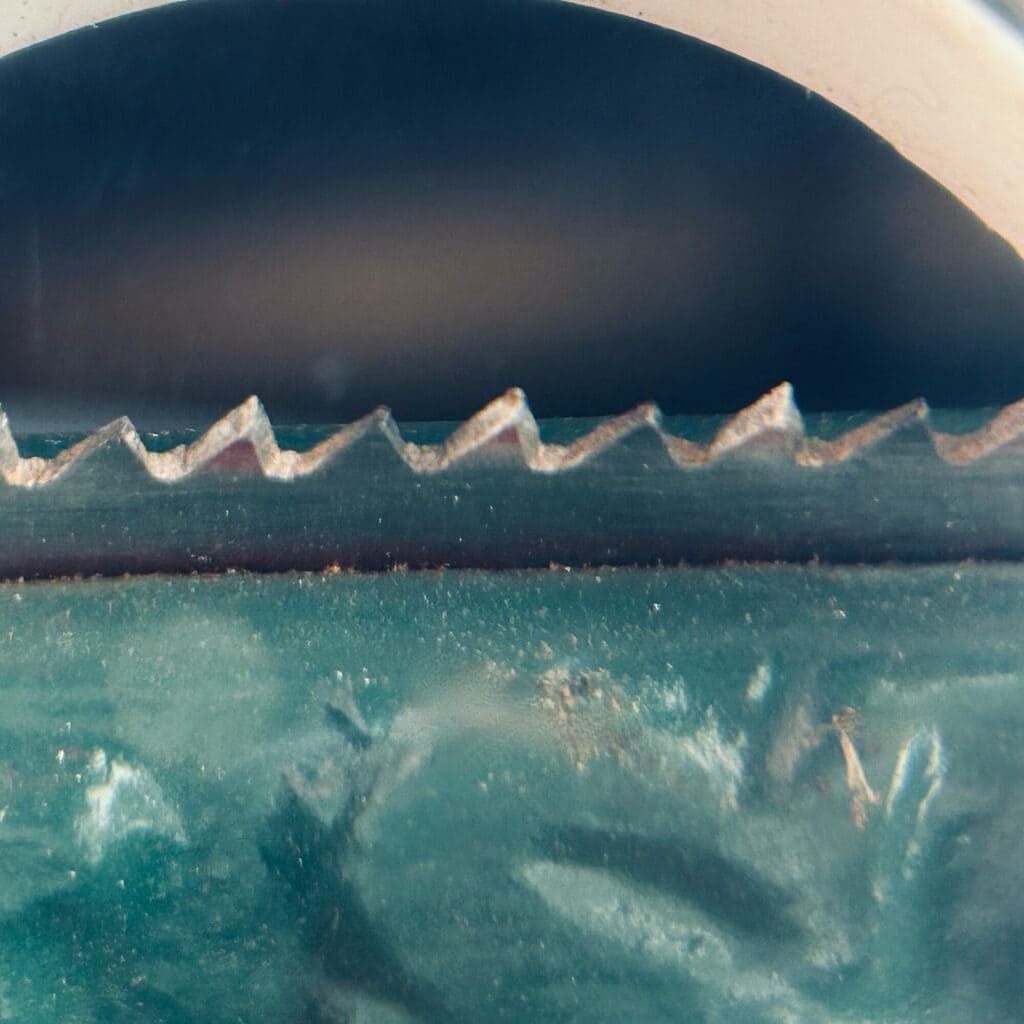
A cross cut tooth is filed at an angle across the plate, so instead of a flat chisel face it has a bevelled edge on the leading corner, alternating left and right down the toothline. That angle is called fleam. The bevelled points score the fibres on each side of the kerf like two knives, and the wood between them crumbles out, leaving a clean edge on end grain instead of a torn one. My carcass saws and small cross cut saws carry 25 degrees of fleam with a 15 degree rake, because shoulders and trimming cuts run across the grain.
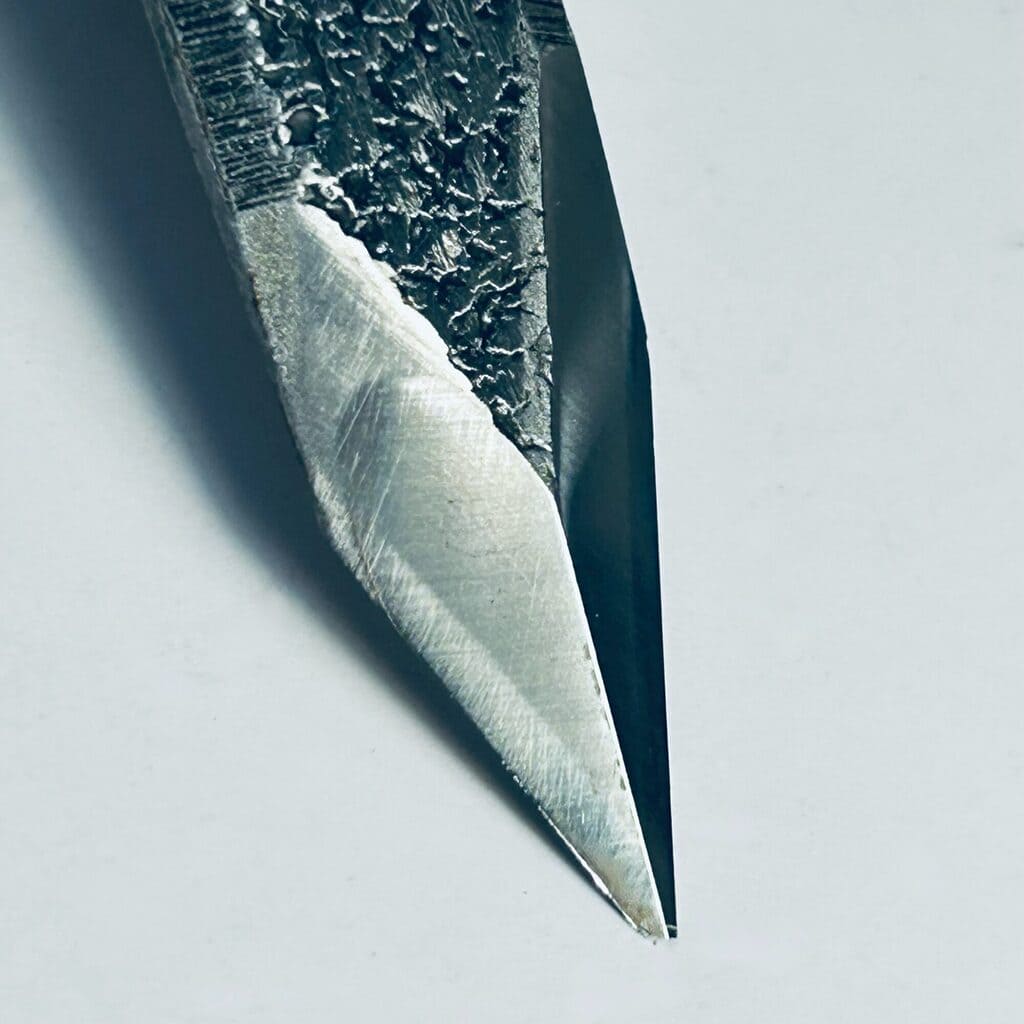
What happens when you swap them
A rip saw used across the grain still cuts, but the flat chisel teeth tear the fibres rather than slicing them, and the far side of the cut splinters. Fine for rough work, no good for a shoulder that’ll show.
A cross cut saw used along the grain is slow. The knife edges are wasted and the teeth can’t take a proper shaving. It’ll do in a pinch, and on a small dovetail most people wouldn’t notice. On a deep tenon cheek you will.
Then there’s the in-between case. Dovetails on a wide board, or a mitre, run neither cleanly along nor cleanly across the grain. A rip saw with a moderate rake handles those well enough, which is another reason the dovetail saw is the first saw to buy.
How to tell which saw you have
Hold the saw with the teeth up and look along the toothline in good light, or with a magnifier. If every tooth is filed straight across, with a flat face square to the plate, it’s a rip saw. If the faces are angled and the angle alternates, so the points lean out one way then the other, it’s a cross cut saw.
If you can’t tell by eye, drag a fingernail across the toothline. Rip teeth feel like a row of tiny chisels. Cross cut teeth feel sharper, more like needles, because the fleam brings each point to a knife edge.
Old saws are often refiled by whoever last sharpened them, so a saw stamped for one job may have teeth for the other. Go by the teeth.
Do you need both
For fine joinery, yes, eventually. A dovetail saw filed rip and a carcass saw filed cross cut cover nearly every cut at the bench, and that’s why those are the two saws in my first batch. If you can only have one, buy the rip dovetail saw and put up with a bit of tear-out on shoulders until you add the second. The saws for sale page lists the filing for every saw, and there’s a post on the different saw types if you want the wider picture.