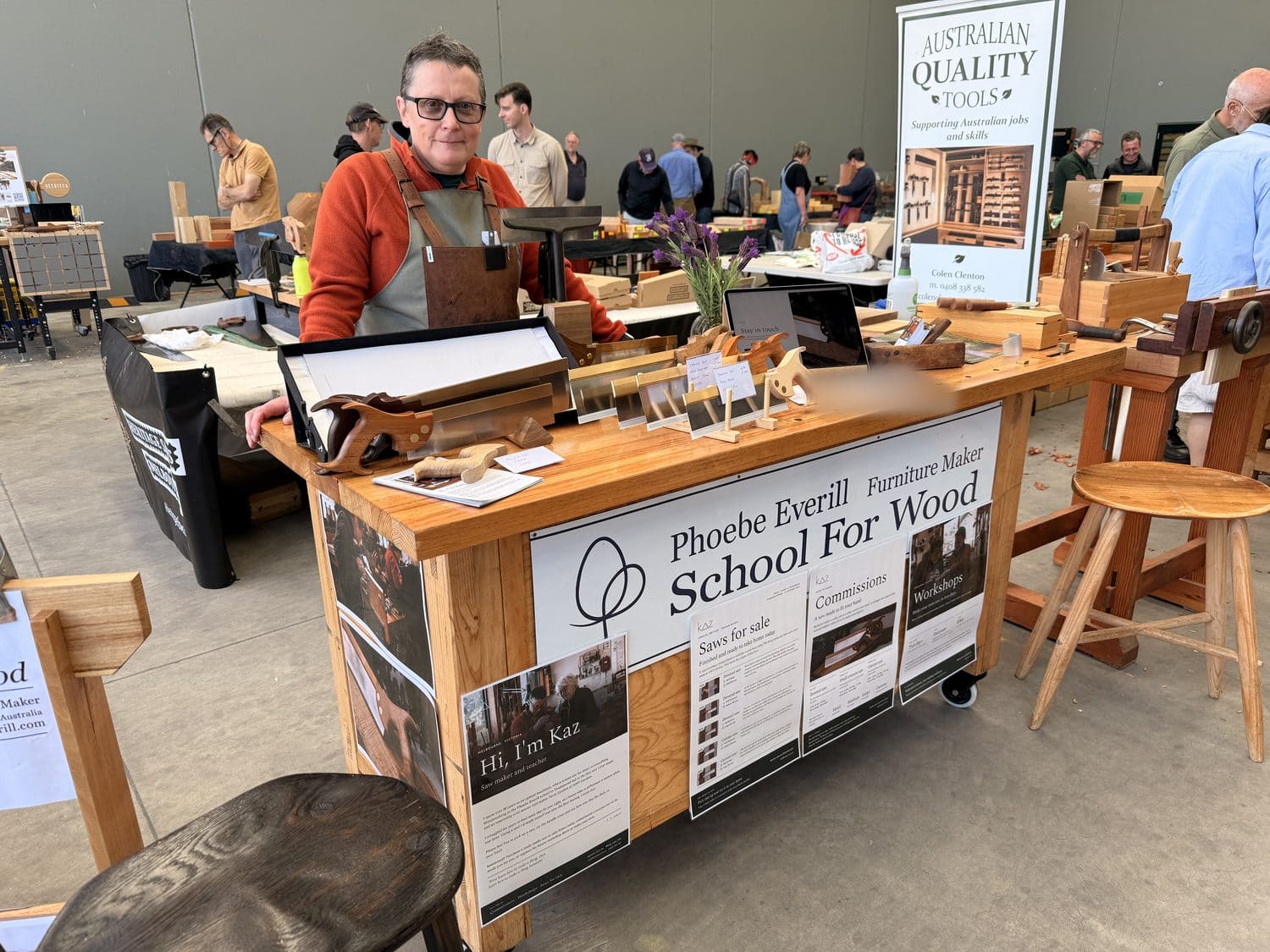
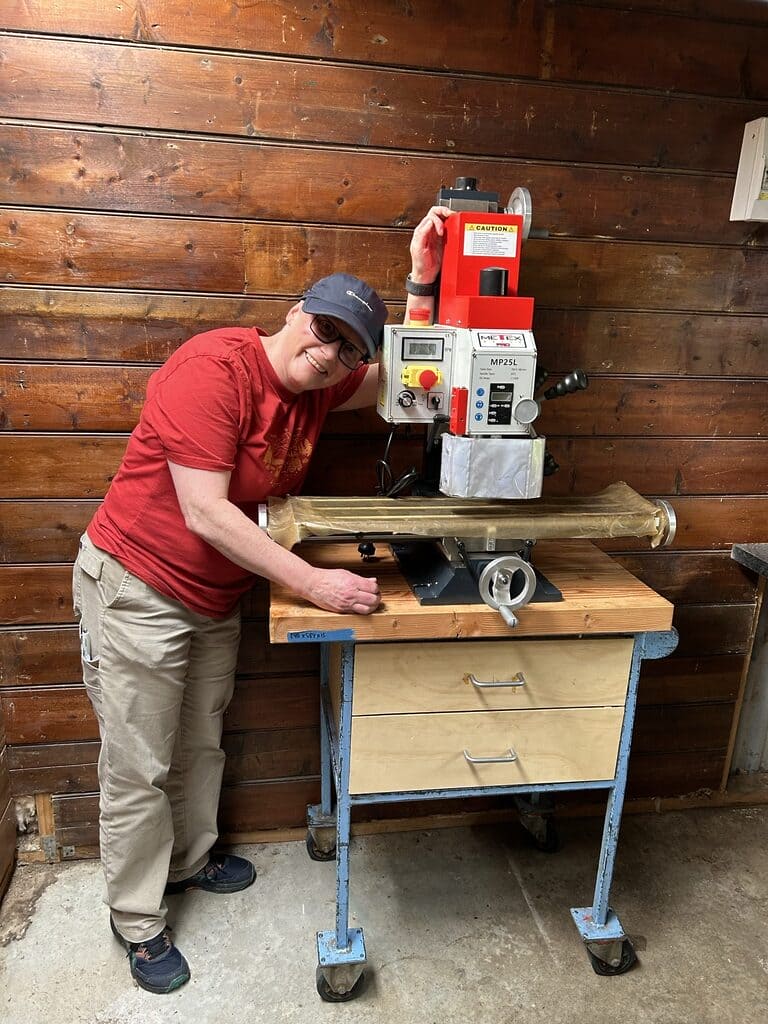
Exciting developments. A friend has kindly given me a space in his barn at Porcupine Ridge to use as my little workshop. It’s about 10 minutes from Phoebe Everill’s school in Drummond, where I teach my saw-making workshops. And on the 28th of September I picked up my milling machine, which was the big piece of the puzzle.
The machine
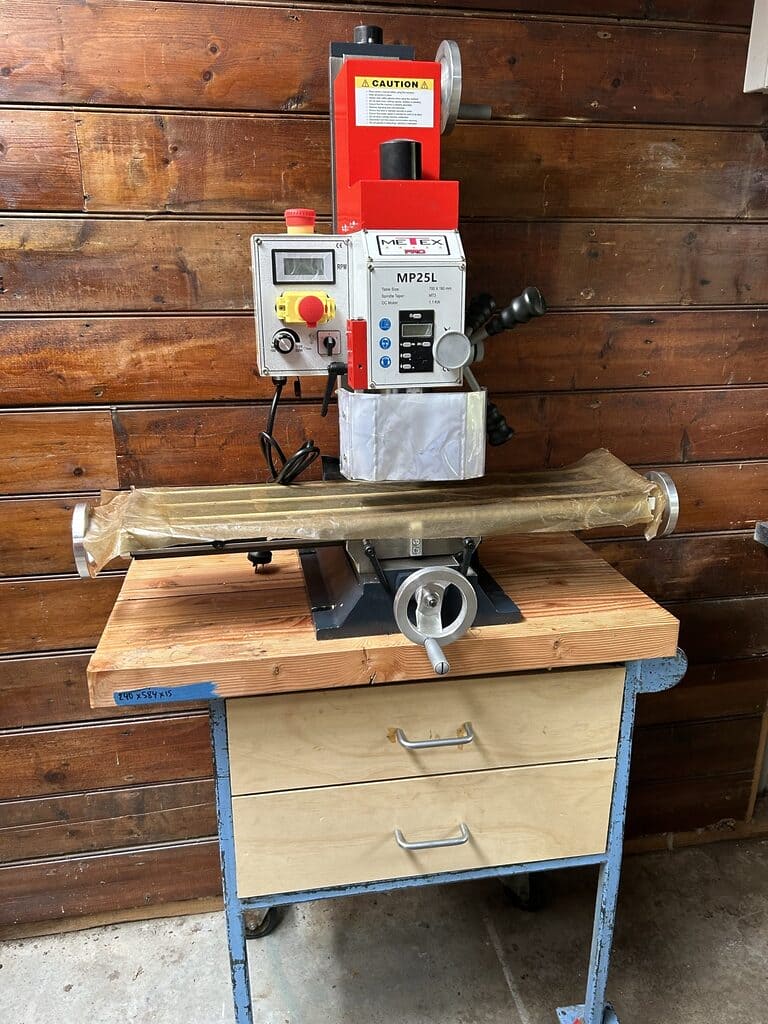
It’s a Metex Pro MP25L, a benchtop mill that’s a good size for a one-person workshop. It has a 1.1kW motor, a 700 by 180mm table and variable speed with a digital readout. The head swivels, and there’s a foot pedal for tapping threads, so both hands stay free.
A milling machine holds a spinning cutter while you wind the work past it. The work is clamped to the table, which moves side to side and in and out on handwheels, and the head winds up and down. The dials let you move things by a fraction of a millimetre, which is what makes a mill so good for cutting straight, square slots in metal.
Cutting the slot in a brass spine
I filmed this while I was being mentored by Terry Gordon of HNT Gordon in northern New South Wales. His big milling machine is cutting a slot down the length of a brass spine with a slitting saw, which is a thin toothed disc.
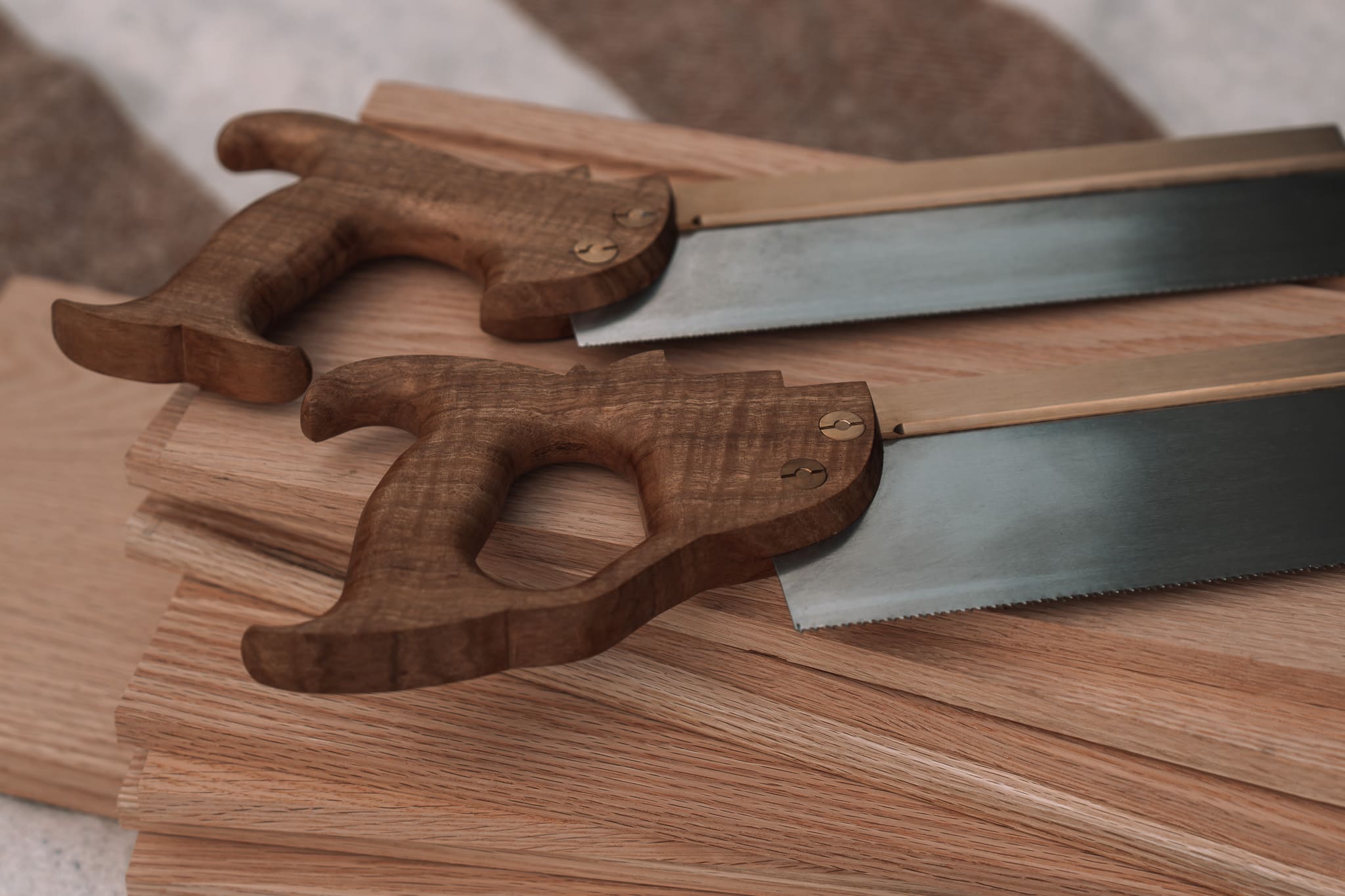
The spine is the heavy bar along the top of a backsaw (there’s more on it in the parts of a backsaw). The saw plate fits into that slot, so it has to be dead straight and just the right width for the plate to sit snug.
The spines on my first batch of saws were made at HNT Gordon. With my own milling machine I can now do this job myself, here in my own workshop.
What’s next
Terry’s machine is a lot bigger than mine, but the job is the same. First I’ll get the mill set up and learn its quirks. Then it’s practice on brass offcuts before I cut a spine for a real saw. I’ll share how the first ones turn out.