Two saws can have the same length, the same pitch and the same plate, and cut completely differently. The difference is in three angles filed into the teeth. Rake decides how hard a tooth bites. Fleam decides whether it chisels or slices. Slope is a smaller refinement to how the gullet clears and how long the point stays sharp. My listings quote the first two for every saw, so this is what the numbers mean.
Rake
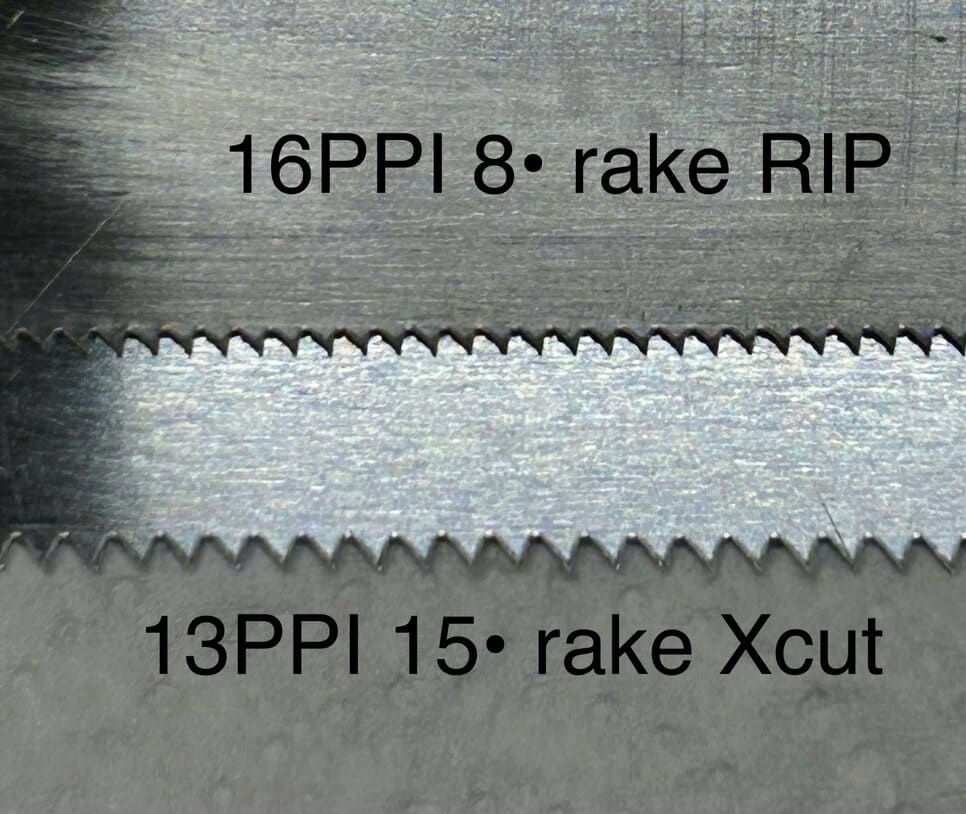
Look at a saw tooth from the side. The front face, the one that does the cutting on the push stroke, either stands straight up, square to the toothline, or leans back towards the handle. Rake is how far it leans, in degrees from vertical. Zero rake is a face standing dead upright. Fifteen degrees of rake is a face leaning back fifteen degrees.
An upright tooth is a chisel driven straight into the wood. It cuts fast and bites hard, but it’s grabby to start, especially on end grain. A leaning tooth is more like a plane iron at a shallow angle. It cuts a little slower but starts easily and doesn’t catch. Rip teeth, which cut along the forgiving long grain, can afford to be upright. Cross cut teeth are already working harder, so they get more rake.
- 0 to 5 degrees: aggressive rip filing for big tenon saws and rip handsaws in softer timber.
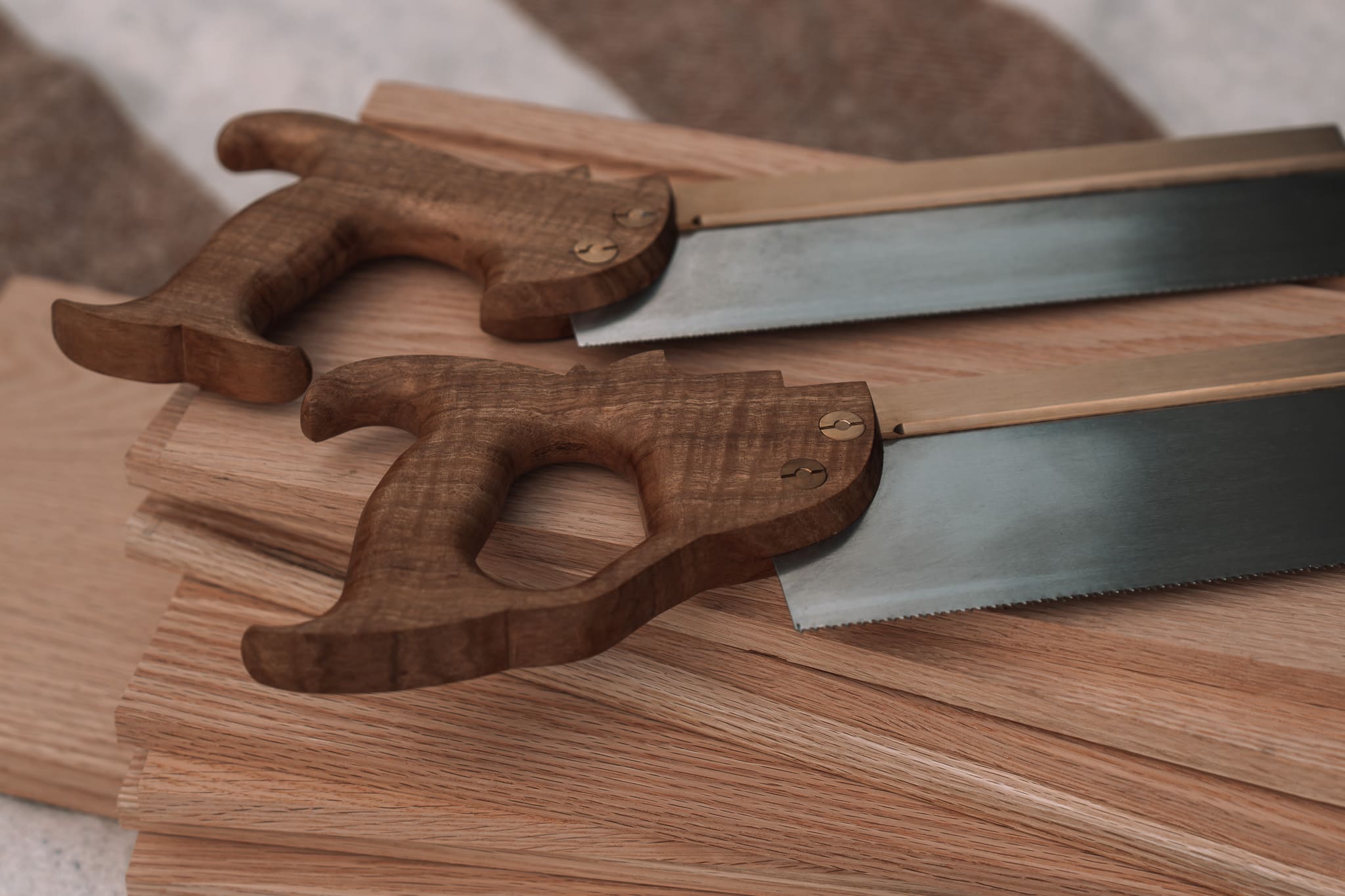
- 8 degrees: my dovetail saws. Fast in the cut, but relaxed enough to start on the corner of a board without jumping.
- 12 to 15 degrees: typical cross cut filing. My carcass saws are at 15.
- 20 degrees and more: very relaxed. Sometimes used on the first inch at the toe to make starting easier, or on saws for very hard timber.
Australian hardwoods come into this. Spotted Gum, Ironbark and the like are dense enough that a saw filed for American cherry will feel harsh in them. A few more degrees of rake makes a saw much friendlier in hard timber for very little loss of speed.
Fleam
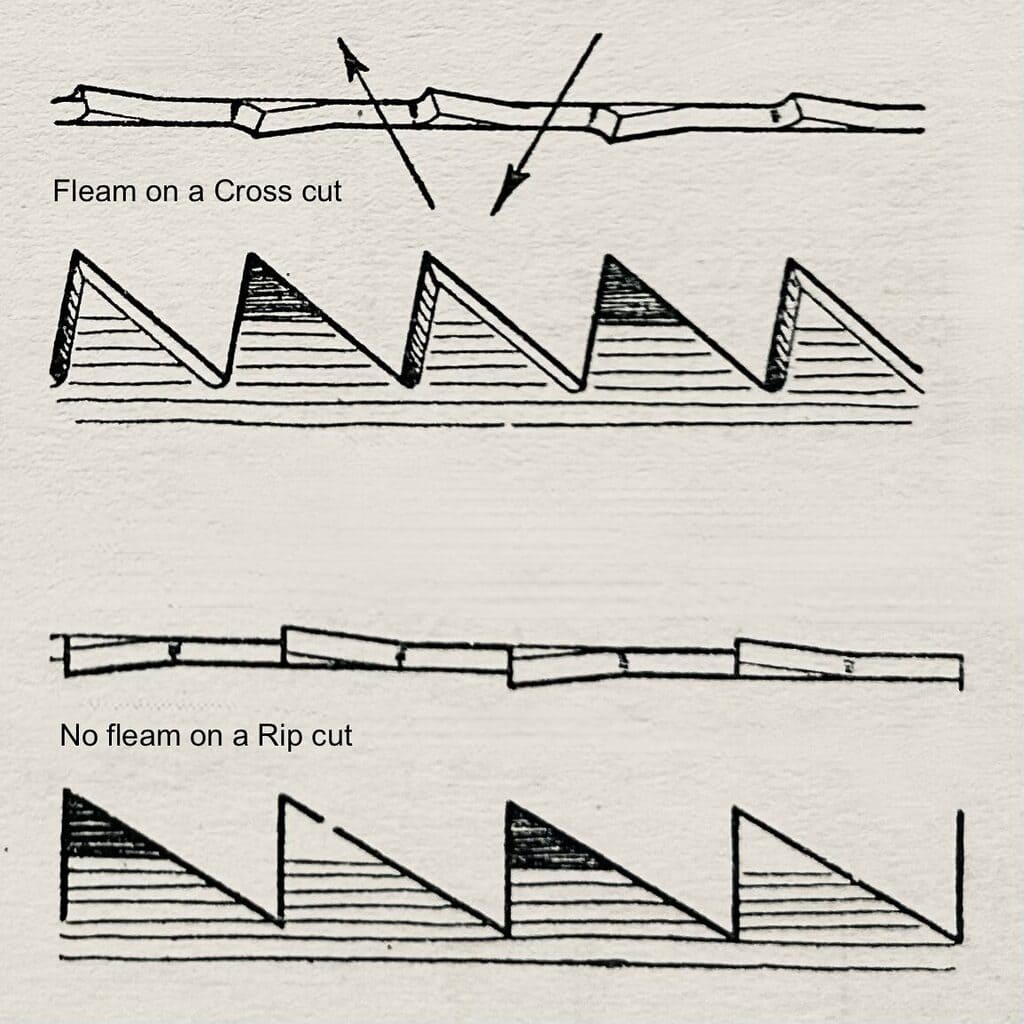
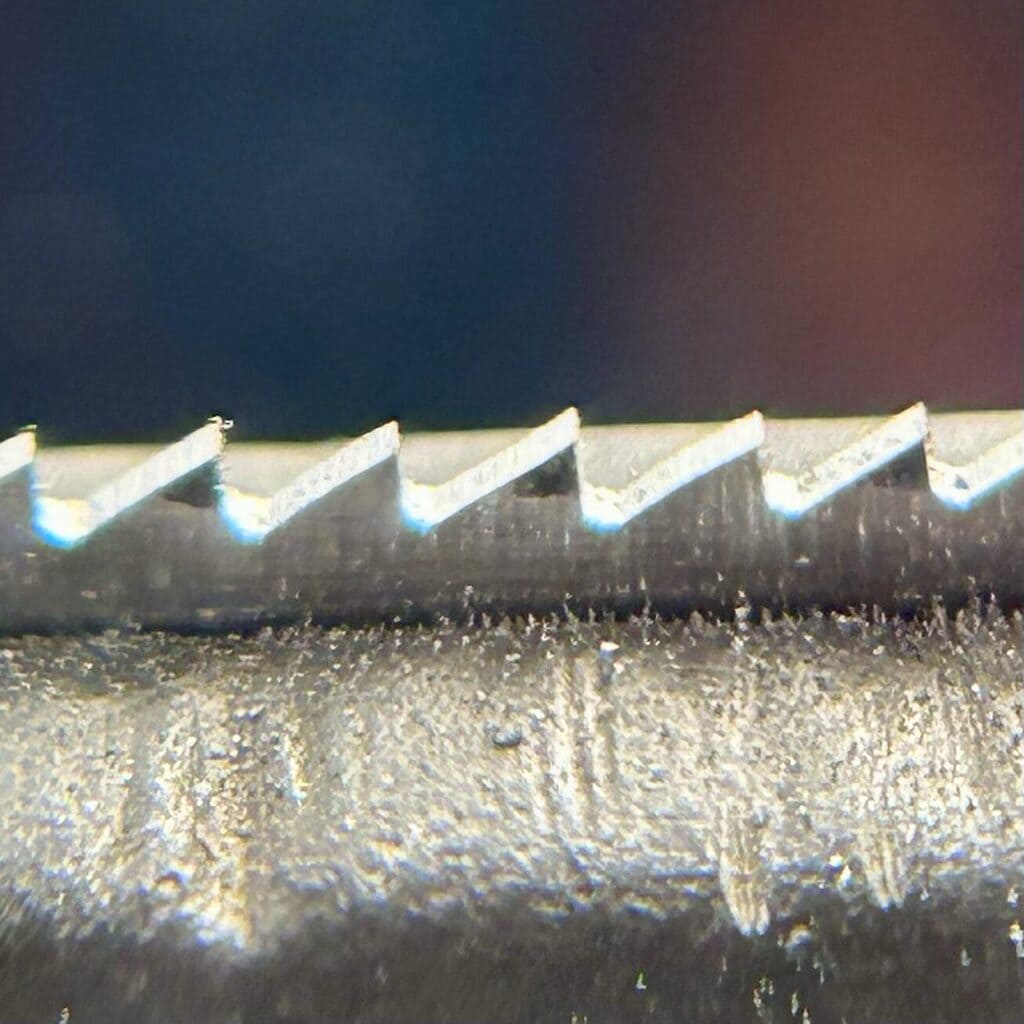
Now look at the same tooth from above, down onto the toothline. On a rip saw the front face runs straight across the plate, square to it. On a cross cut saw the face is angled across the plate, and the angle alternates tooth by tooth, one leaning left, the next leaning right. That angle is fleam, measured from square. Zero fleam is a flat chisel face. Twenty-five degrees of fleam is a face angled 25 degrees across the plate.
Fleam turns a chisel into a knife. With the face bevelled, the outside corner of each tooth comes to a sharp point that scores the wood fibres on its side of the kerf. The left-leaning teeth score the left wall, the right-leaning teeth score the right wall, and the wood between crumbles out. That’s what gives a cross cut saw its clean edge on end grain, and why a rip saw, with no fleam, tears when you use it across the grain.
- 0 degrees: rip saws. My dovetail saws have no fleam at all.
- 15 to 20 degrees: a light cross cut filing that still rips tolerably. A fair compromise on a saw that has to do both.
- 20 to 25 degrees: full cross cut. My carcass saws are at 25.
- 30 degrees and above: a very fine slicing action, but the points are fragile and dull quickly. Rare on a working saw.
Slope
The third angle is the least talked about. When you file a saw, the file sits in the gullet between two teeth and shapes the back of one and the front of the next at the same time. Normally the file is held level. Slope means tipping the handle of the file down a little, so the gullet runs on an angle across the plate instead of straight across. You’ll also hear it called sloped gullets.
Slope does two small things. It lengthens the bevel on the cutting face, which keeps the point sharp a little longer, and it opens the gullet on one side, which some filers find clears dust better on a cross cut saw. It’s only used with fleam. On a rip saw there’s no point. Typical values are 5 to 10 degrees, and on a fine backsaw the difference is hard to feel. I mention it because you’ll come across it in sharpening guides. I don’t quote it on my listings.
Set
Set isn’t an angle, but it belongs with these three because it’s the last thing that shapes how a tooth cuts. It’s the slight outward bend given to alternate teeth so the kerf is wider than the plate. Too little and the saw binds in the cut. Too much and it wanders, cuts rough and wastes wood. A fine backsaw wants very little, well under a tenth of a millimetre each side, and a lot of the older saws I see have far too much.
How to see the angles on your own saw
Hold the saw teeth up under a lamp with a magnifier. From the side you can see whether the front faces are upright or leaning: that’s rake. From above, look for the faces alternating left and right down the toothline and the bright bevels on the outside corners: that’s fleam. If both faces are square and flat, it’s a rip saw with no fleam. Slope is hard to see without a jig, so don’t worry about it.
Once you can read these angles you can read any saw, including the saws I have for sale, where rake and fleam are listed for each one. And when you come to sharpen a saw yourself, these angles are most of the job: hold the file at the right rake and the right fleam, and repeat down the toothline. The sharpening post walks through it.