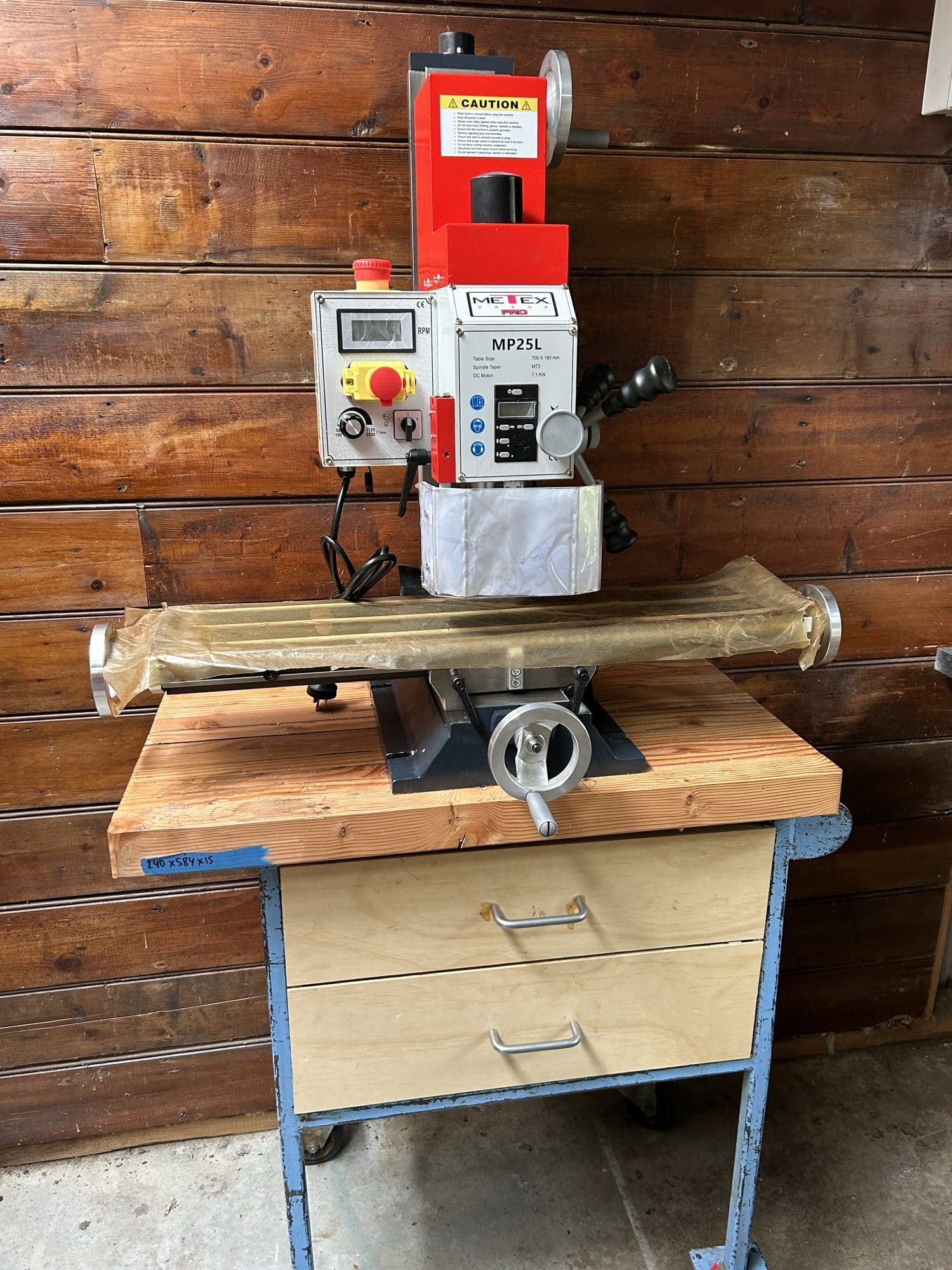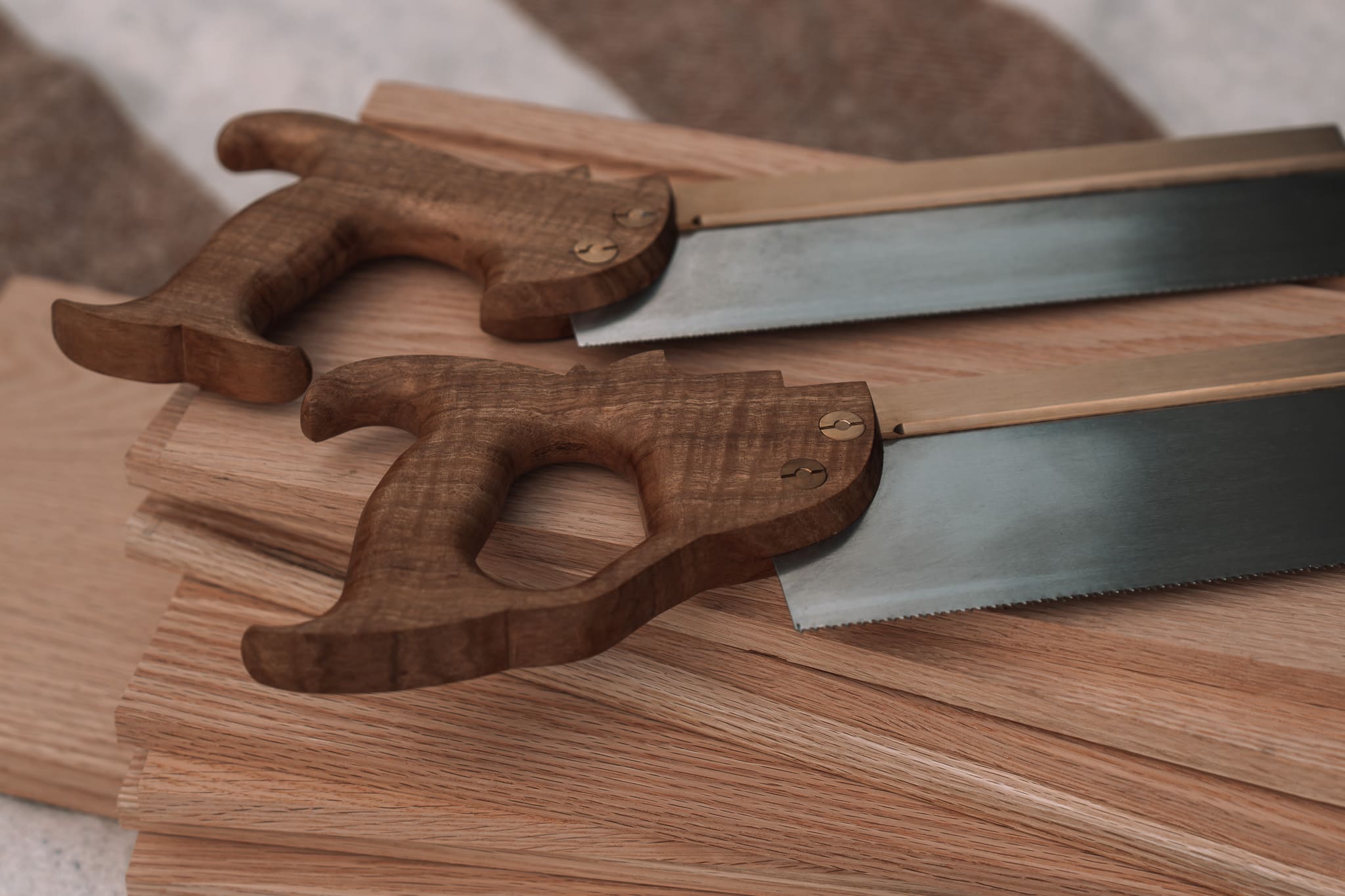
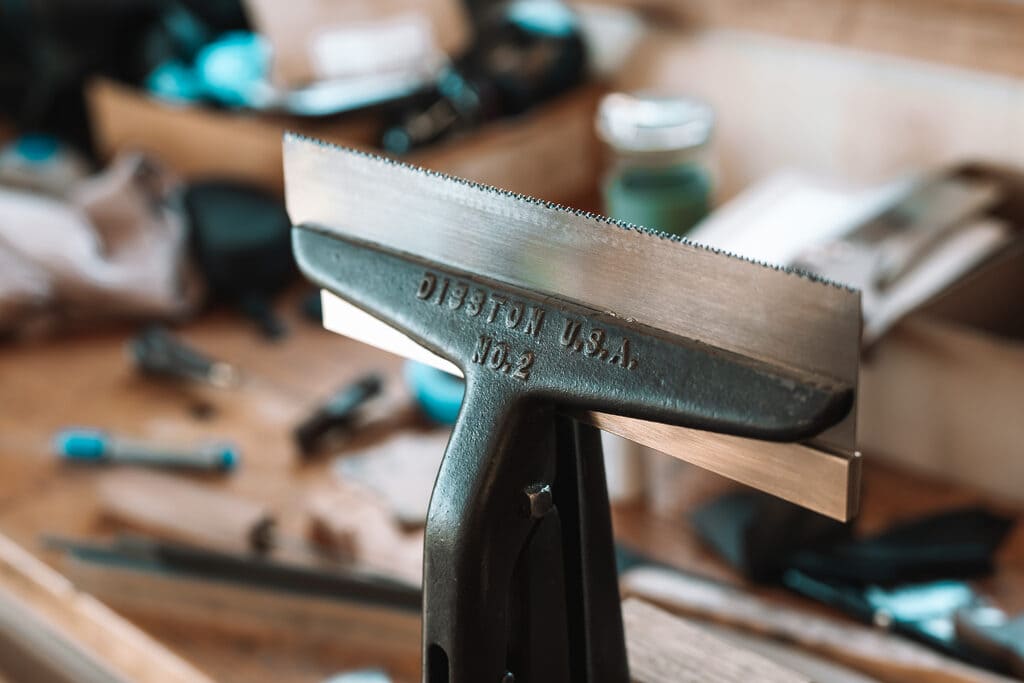
Ask two people how coarse a saw is and one will say twelve teeth per inch and the other thirteen points per inch, and they can both be describing the same saw. The two counts are always off by one, and it trips people up when they’re comparing saws or buying files.
Points per inch
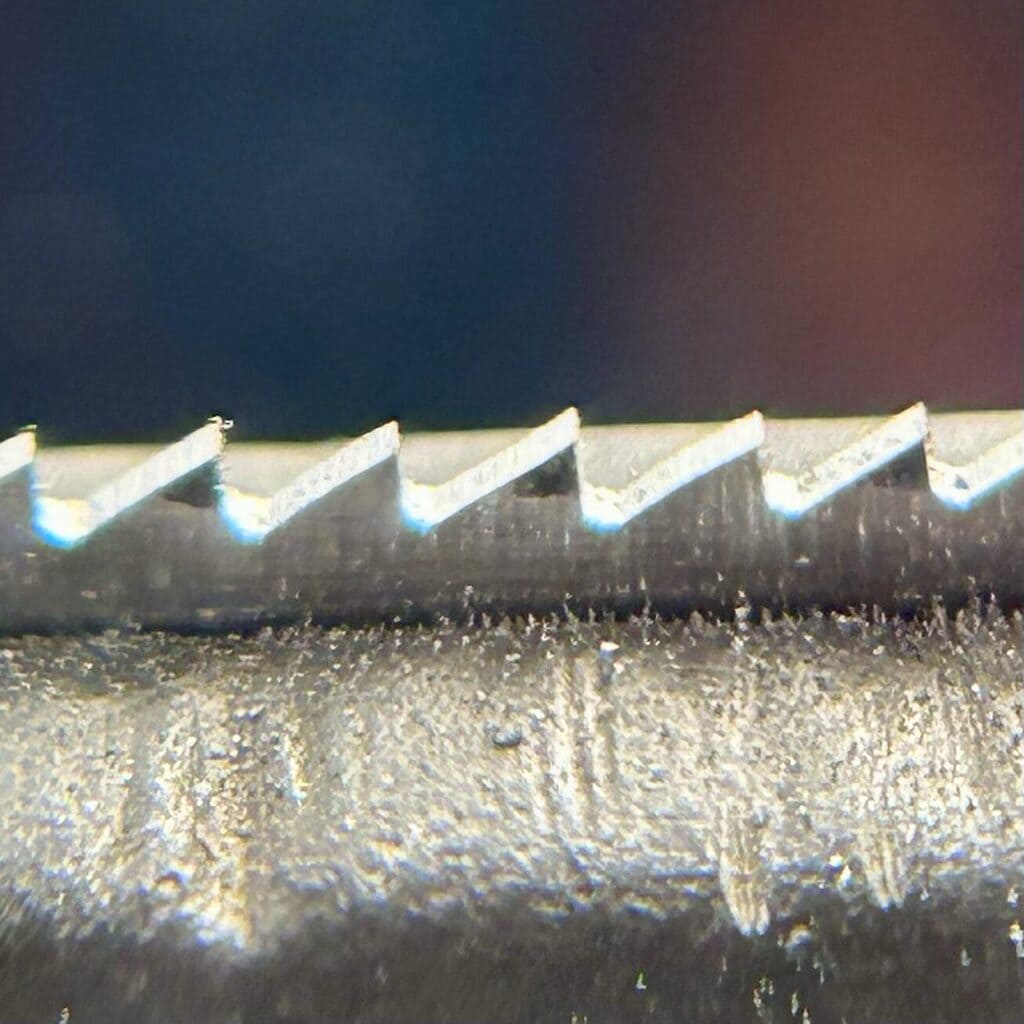
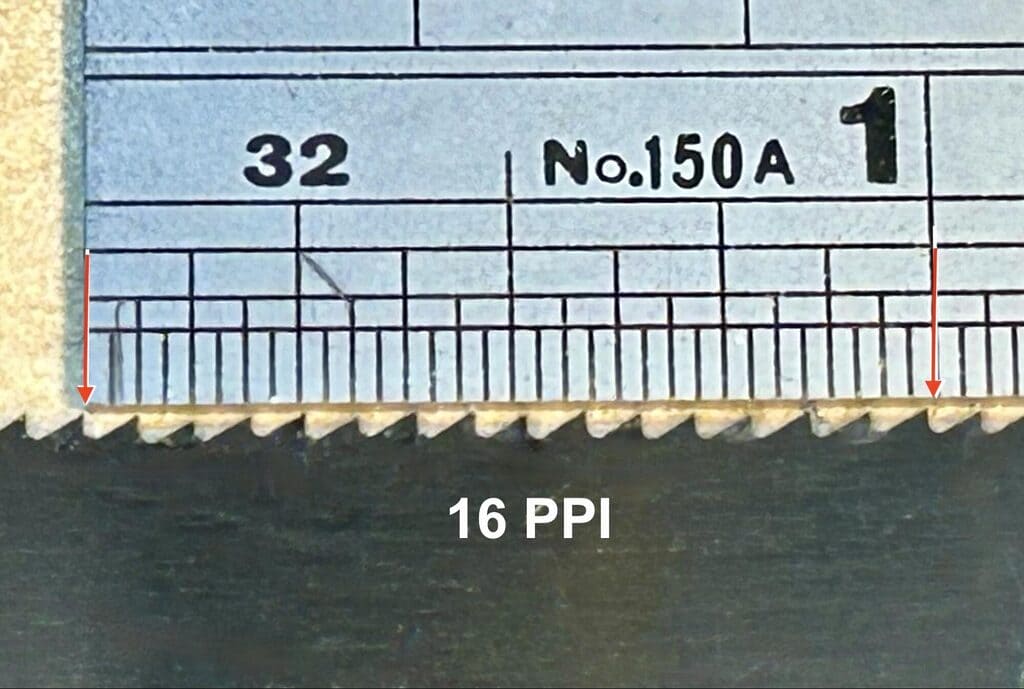
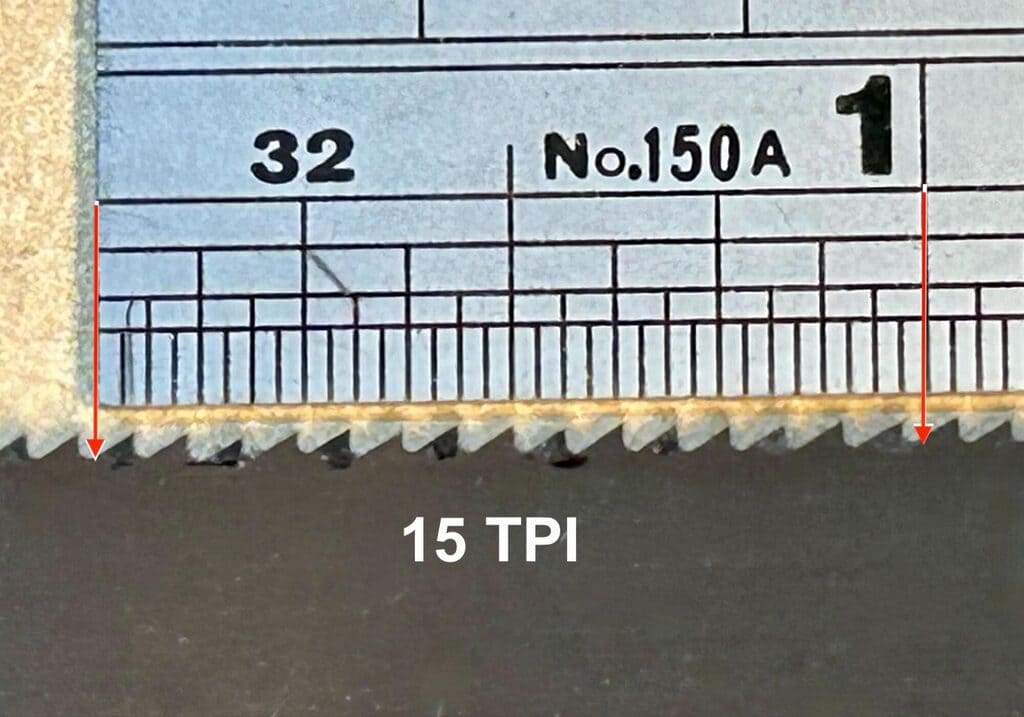
PPI counts the tips of the teeth, the points, that fall inside one inch of the toothline, including the point at each end. Lay a rule along the teeth with the zero on one point and count every point up to and including the one at the one inch mark. That’s the traditional way saw makers described their saws and the number stamped on most old ones. My saws are listed in PPI: 16 on the dovetail saws and 13 on the carcass saws.
Teeth per inch
TPI counts whole teeth, the triangles, in one inch. Because the inch starts on a point and ends on a point, there’s always one more point than there are complete teeth in between. So a 13 PPI saw is a 12 TPI saw, and a 16 PPI saw is 15 TPI. The number is one lower, every time.
| Points per inch | Teeth per inch | Pitch (distance between points) |
|---|---|---|
| 20 | 19 | 1.34mm |
| 16 | 15 | 1.69mm |
| 13 | 12 | 2.12mm |
| 11 | 10 | 2.54mm |
| 8 | 7 | 3.63mm |
Which count a maker uses is mostly habit. Old English and American makers used points. Some modern makers and some file charts use teeth. Neither is wrong, but check which one you’re reading before you compare two saws.
Pitch
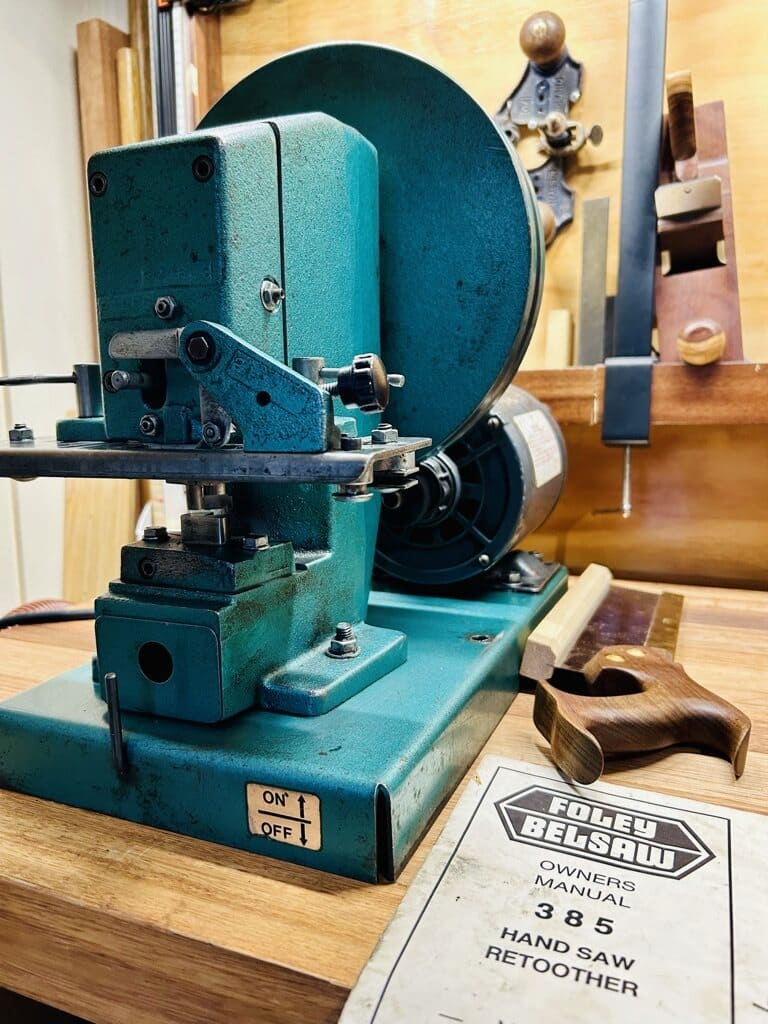
Pitch is a third way of saying the same thing. It’s the distance from one tooth point to the next, and it’s what the count is really measuring. Divide an inch, 25.4mm, by the teeth per inch and you have the pitch. A fine pitch means small teeth close together. A coarse pitch means big teeth further apart. When I set up the Foley retoother to cut a new toothline I’m choosing a pitch, not a count.
Why inches
The files, the setting tools and the retoothing machines the trade uses were all built around inch pitches, and that equipment is still in use, mine included. So saw people still talk in points per inch even in a metric country. Everything else on my listings is in millimetres. The tooth count is the one number where I keep the old unit, because it’s the one everybody understands.
How to count the teeth on your saw
- Lay a steel rule flat against the plate with its edge along the toothline. A rule marked in inches is easiest. Otherwise use the 25.4mm mark.
- Line the zero up exactly on the point of one tooth.
- Count every point from that one up to and including the point nearest the one inch mark. That’s your PPI. Take one off for TPI.
- Do it in two places along the plate. A saw that has been refiled by hand can drift a little from heel to toe.
If the teeth are too fine to count by eye, take a photo on your phone close to the rule and count on the screen. It’s quicker than a magnifier.
What the number tells you
Fine teeth cut slowly and leave a smooth surface. Coarse teeth cut fast, leave a rougher surface, and their bigger gullets clear dust better in thick timber. The count that suits a job depends on how deep the cut is and how clean the finish needs to be.
- 14 to 20 PPI: dovetail saws and fine joinery. Thin stock, shallow cuts, a surface that needs no cleaning up.
- 12 to 14 PPI: carcass saws. Shoulders and trimming, where you want a clean edge with a bit more speed.
- 9 to 12 PPI: tenon saws. Deep rip cuts in thick stock, where clearing dust matters more than surface.
- 5 to 10 PPI: handsaws for breaking down boards.
As a rough guide you want at least three or four teeth in the wood at any time, or the saw will catch and jump. That’s why a very fine saw struggles to start on a corner and a coarse saw is hopeless on thin stock. The count also decides which file you need to sharpen it. There’s a file size table in the sharpening post.