
What I do
Handsaws made to fit your hand, and workshops to make your own
Hi, I'm Kaz. I make custom-fit backsaws from mostly Australian timbers, and I teach hands-on workshops where you build your own saw, sized to your hand. I struggled for years to find tools that fit just right, so I know what a difference it makes when one does.

How it started
From spectacles to saws
I spent 35+ years as a qualified optical mechanic, grinding lenses to prescription and fitting them into frames. You develop a keen eye for detail doing that, and it turns out those skills come in handy in tool making.
My woodworking started at the Phoebe Everill Furniture Making School in Drummond. That led to an internship with master tool maker Terry Gordon of HNT Gordon. The first time I made a saw I didn't know if I could, but I wanted to have a go. Finishing it, then using a tool I'd made myself, was the best feeling.
I made that.
Then I made another that improved on it, and another. First learn how to make a thing, then learn how to make a thing beautiful. That line from E. N. Curtis has stayed with me. Every time I pick up a tool I made, it takes me back to that moment and the joy of making. That's how Kaz Saw came about, from necessity, curiosity and a love of making.
What I make
Three backsaws, all made to fit
Every saw has a 0.5 mm spring steel plate, a brass spine I make myself and brass split nuts. Handles come in small, medium, large or custom, and no two pieces of timber are the same, so every saw is unique.
Split-nut screwdrivers in assorted timbers, and a sharpening and retoothing service, are coming soon.
Rip cut
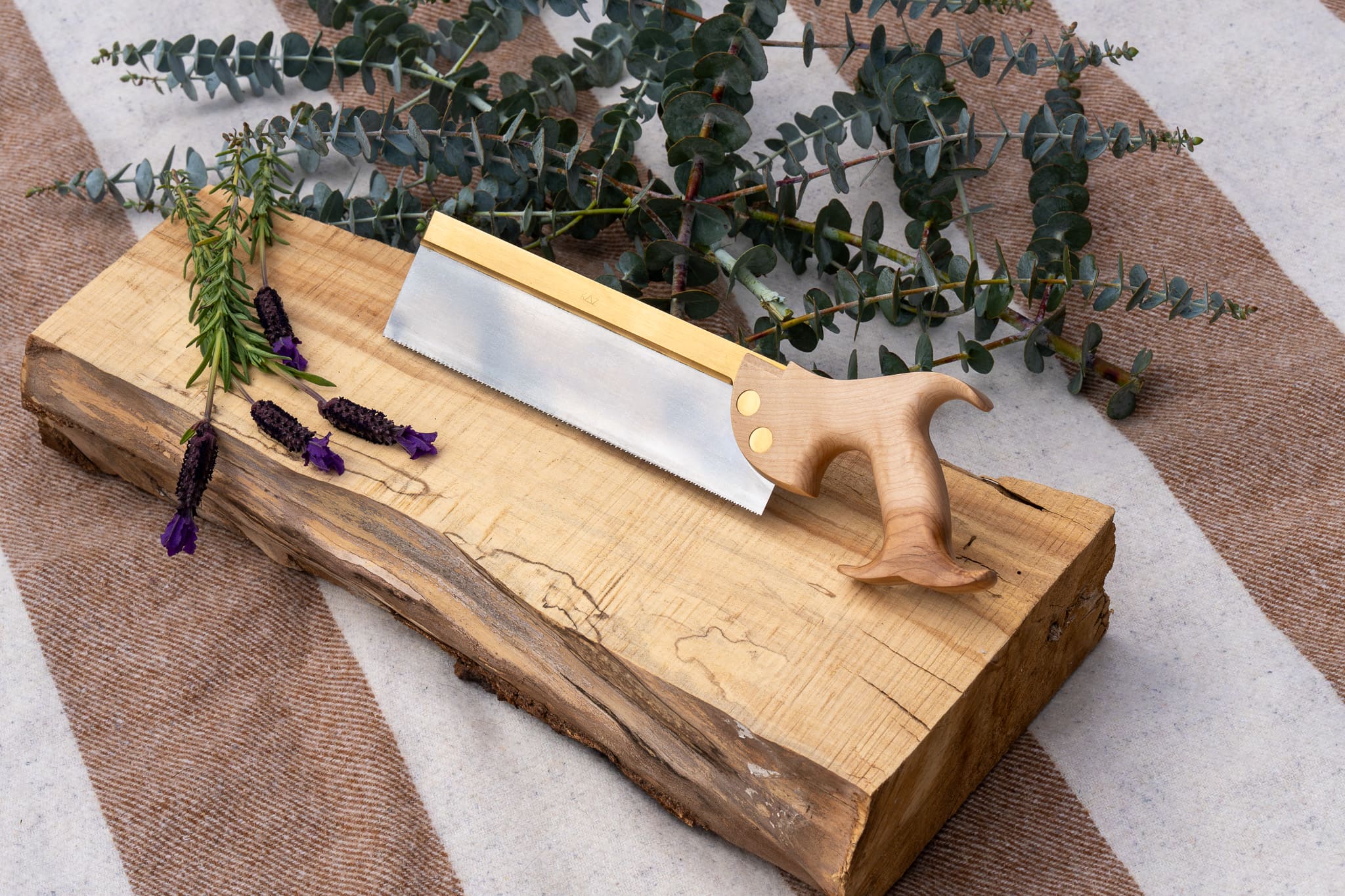
Dovetail saw
For fine joinery and precise cuts like a dovetail joint. A thin blade with small teeth for cutting with the grain.
250 mm blade, 16 PPI, rip cut with an 8 degree rake.
Cross cut
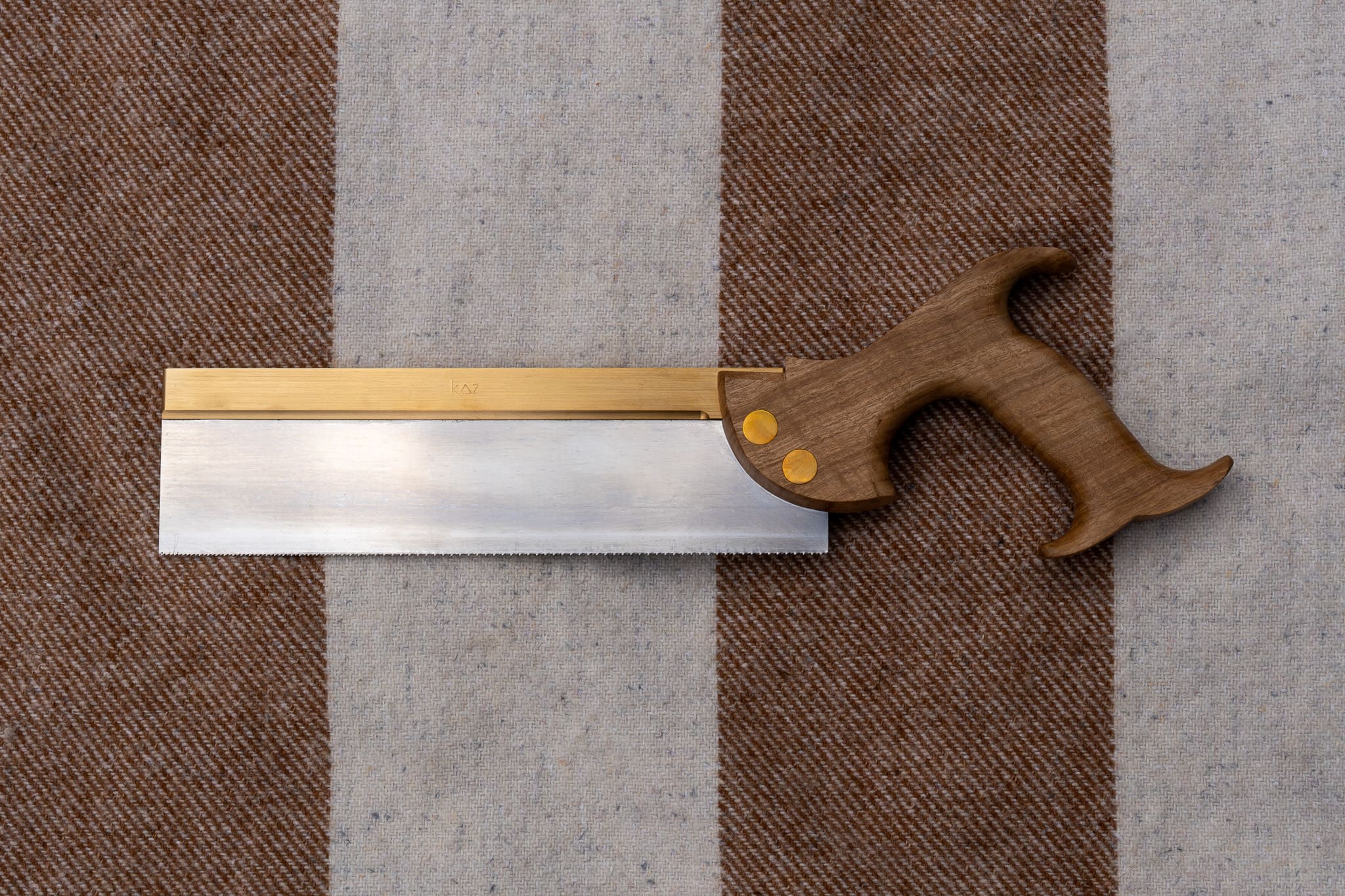
Small crosscut saw
The handy little saw I reach for the most at the bench when I need to cut a small piece. Fine teeth for cutting across the grain.
250 mm blade, 13 PPI, cross cut with a 15 degree rake and 25 degrees of fleam.
Cross cut
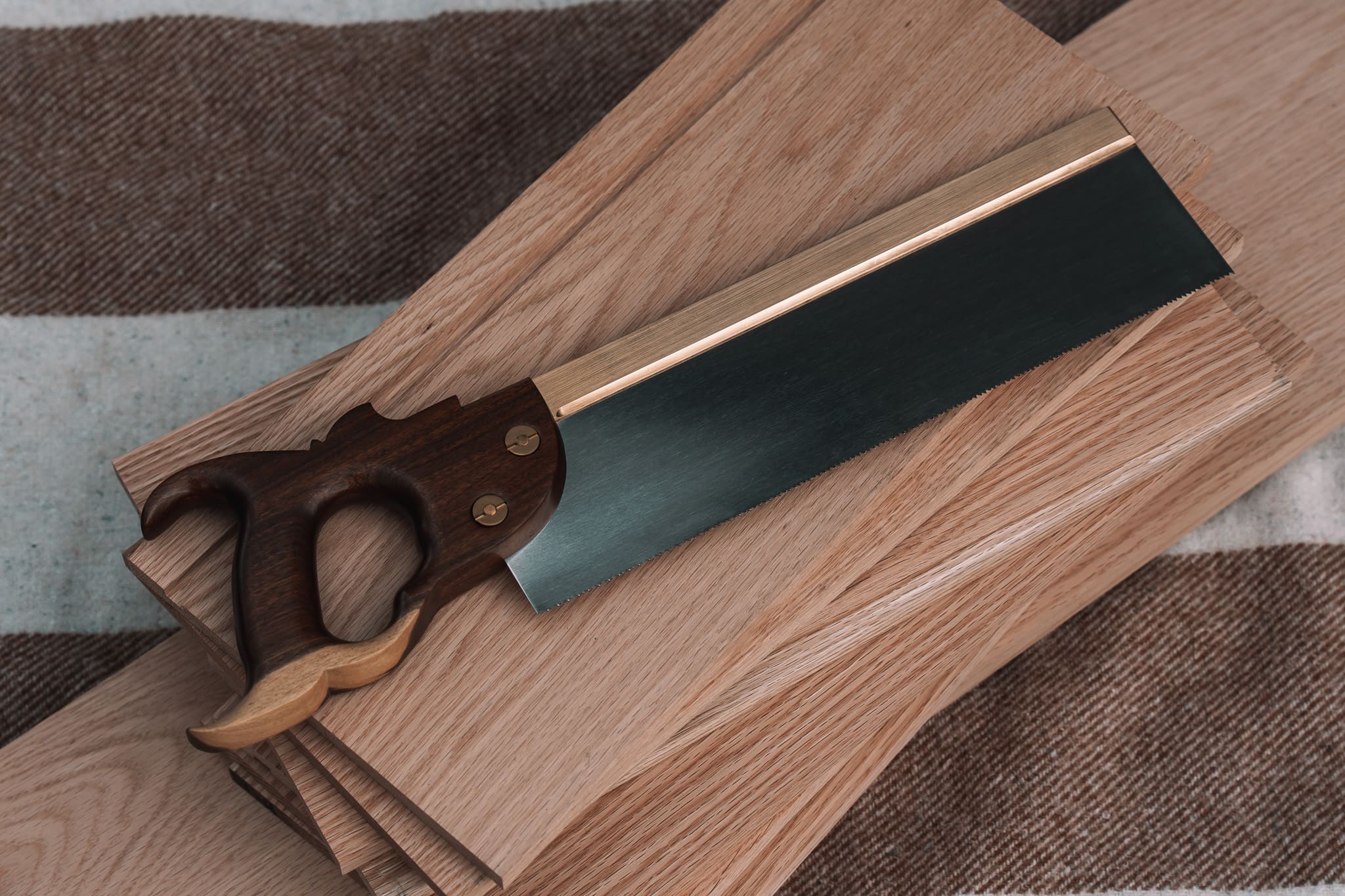
Carcass saw
For general bench work and larger joints. A deeper, longer blade that cuts across the grain.
300 mm blade, 13 PPI, cross cut with a 15 degree rake and 25 degrees of fleam.
Timber
Salvaged, and already carrying a history
Most of my handles come from recycled or repurposed offcuts of locally sourced timber, from master furniture makers around the Hepburn Shire and across Victoria. Pieces too small for a furniture maker to use are just right for a saw handle.
Some of it is salvaged stock from the Melbourne Guild of Fine Woodworking, responsibly harvested. I've used timber from the Royal Botanic Gardens in Melbourne, and rich Blackwood from deep in the Otways. Some was reclaimed from an old building being torn down, so the tool already has a history before it reaches your hand.
I also use some exotic timbers. Whatever it is, every handle shows the character of the piece it came from.
A favourite: Gidgee, Acacia cambagei
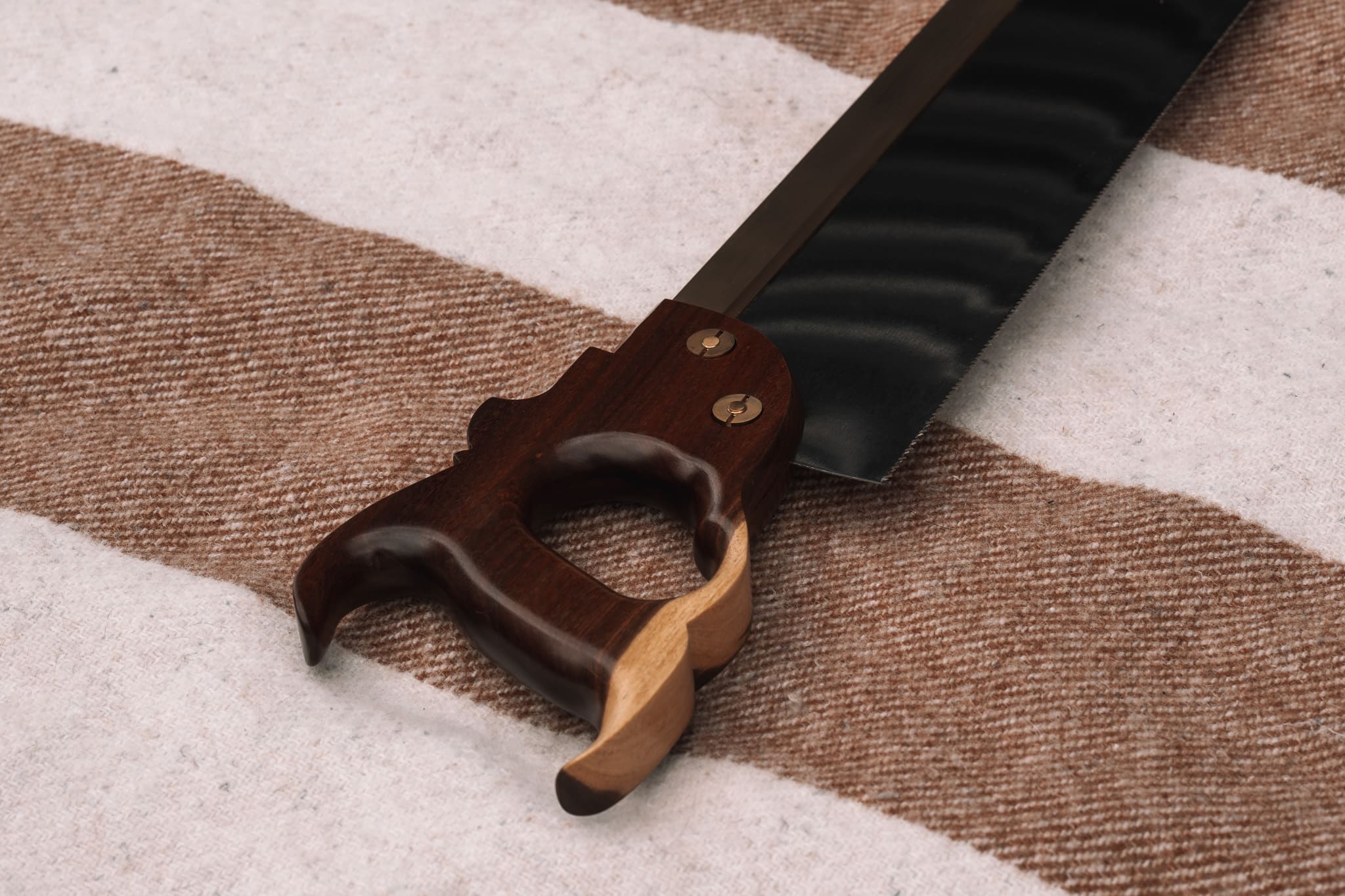
When it's finished it has a warm, buttery smooth feel in the hand. It makes it a pleasure every time I pick up my saw, and the deep rich brown looks sensational.
A hardy native of the arid outback of Queensland and the Northern Territory, and one of Australia's hardest woods. Dense and heavy, which gives a saw a good weight and balance. The Kalkadoon people used Gidgee for boomerangs, nulla nullas and clapsticks.
Mentors and background
The people who taught me
Furniture maker, teacher, mentor
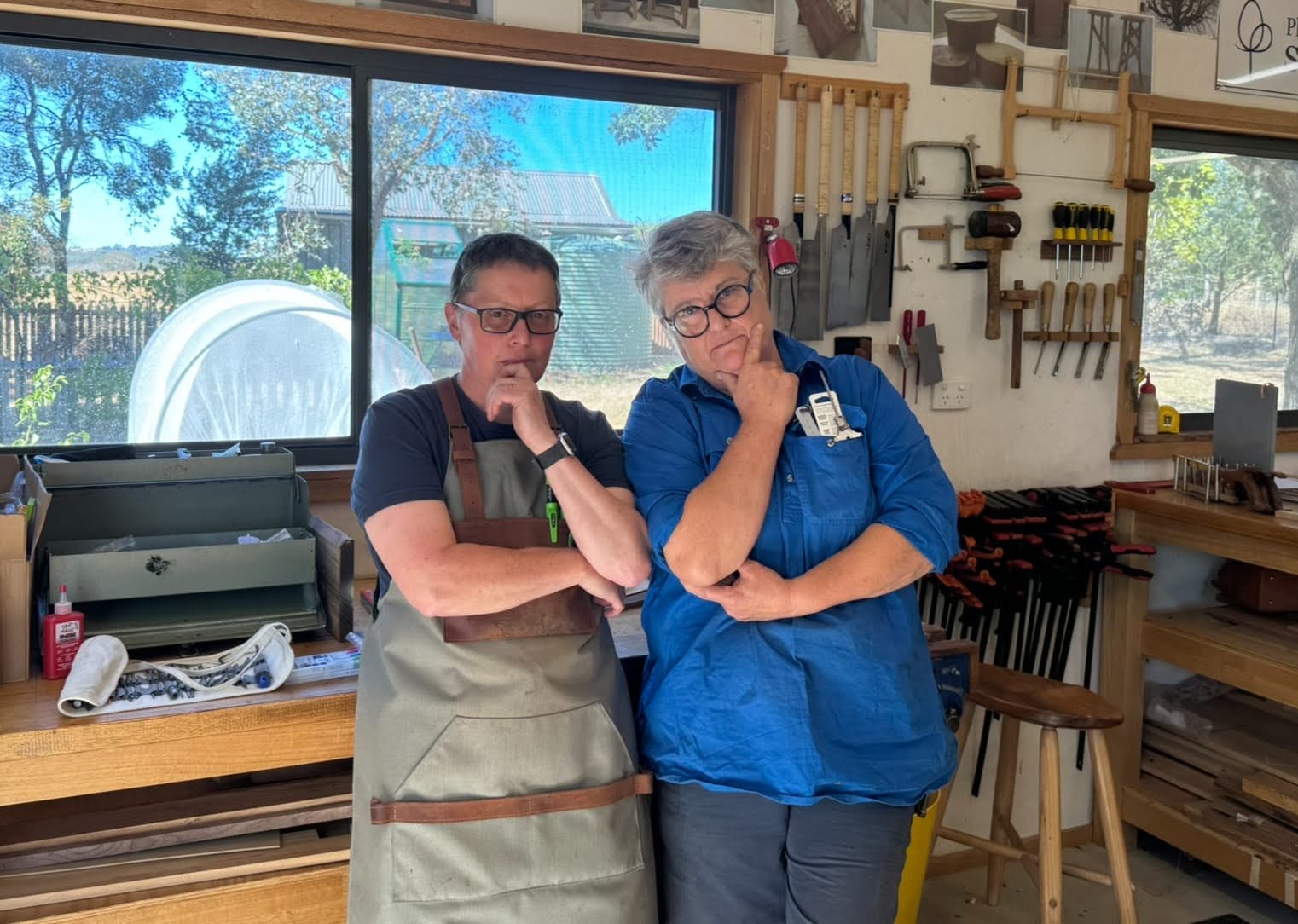
Phoebe Everill
Where my woodworking started. I enrolled in an intensive workshop at Phoebe's school in Drummond and learned to use workshop machinery safely, cut joinery and work with hand tools. In a small class you're guided in your making, and that built a strong foundation. Just as valuable was the attitude when mistakes happen: recover, adapt, find a new way of doing. Phoebe spotted my love of tool making and has encouraged me every step, including setting up my internship with Terry.
Master tool maker, HNT Gordon
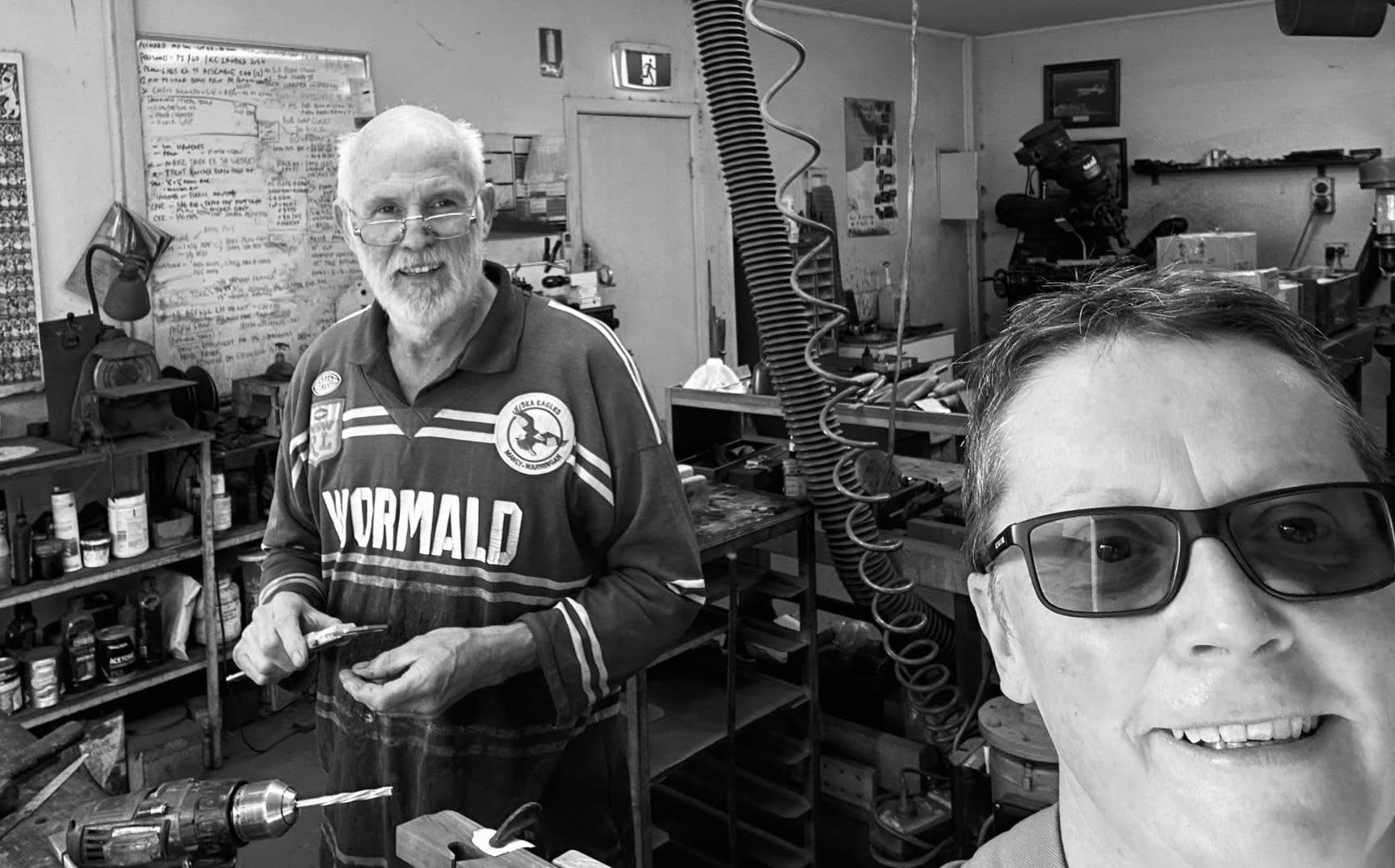
Terry Gordon
I had the privilege of spending time learning tool making with Terry in northern New South Wales. He's a fountain of knowledge on every part of it. He taught me the metal lathe, where I made my own saw nuts and bolts, along with milling, timber conditioning and much more. I even made new tools to use in my own saw making. That time took my tool making to the next level.
Before all this
35+ years in optics
I qualified as an optical mechanic in 1994 after a four year apprenticeship in optical fitting and surfacing. Grinding lenses to prescription, fitting them accurately into frames, fine adjustments, repairs and problem solving all need a keen eye for detail. Those habits came with me into the workshop.
Thirty years of Seido karate
Sensei, fourth dan
I started karate for fitness and self defence in the early 90s and learned much more from it: biomechanics, discipline and focus, meditation, and the confidence to teach groups of all levels and abilities. Two philosophies come into the workshop with me. Dotei, enjoying the process rather than fixing on the end result. And Ren-ma, constant polishing, the never ending improving and refining.
Have a go
Make one with me, or have one made for you
Come to a two day workshop and build your own saw, or tell me about your hands and the work you do and I'll make one to fit.
In the workshop
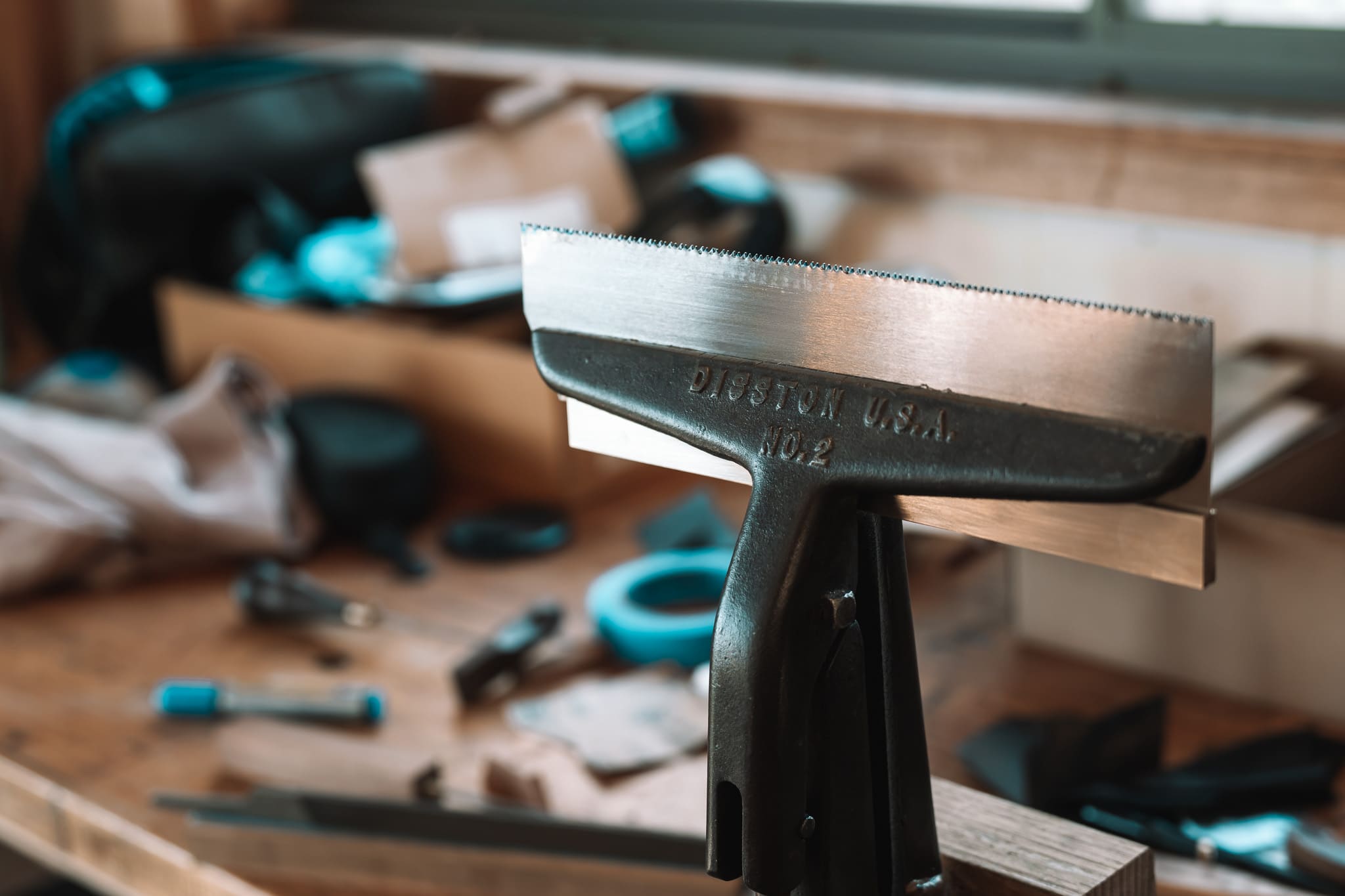
The tools behind the tools
Saw making needs a few machines you won't find in most sheds. A Foley retoother cuts a fresh tooth line, a guillotine cuts the spring steel plate, and my restored saw vice holds the blade while I shape, set and sharpen the teeth. And now I have a milling machine, set up in my new barn workshop at Porcupine Ridge.
Places I buy from
Urban Salvage, timber merchant
Melbourne Guild of Fine Woodworking, salvaged and responsibly milled timber
Japanese Tools Australia
Koodak Jeweller’s Supplies, F. Dick needle files
Gemcuts in Ballina NSW, Corradi needle files
Set & File by Matt Cianci, the best resource I know for explaining saw sharpening
