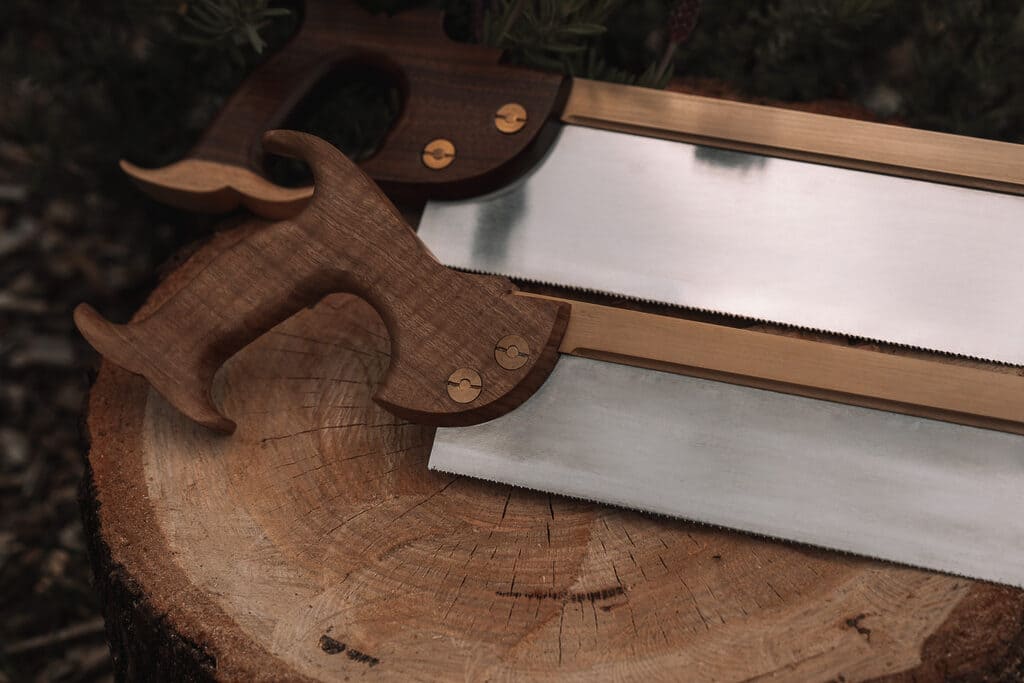
Saw names are confusing because they describe the job the saw was made for, not what it looks like, and the jobs overlap. A dovetail saw will cut a tenon and a carcass saw will cut a dovetail. The names still matter, because they tell you the size, the tooth pitch and the filing the maker chose, and those decide how the saw behaves. This is how I sort the types of backsaw, and where mine fit in.
Backsaws and handsaws
The first split is simple. A backsaw has a stiffening spine along the top of the plate, so it can use a thin plate and cut very accurately, but only to a limited depth. A handsaw has no spine. Its plate is thicker so it holds itself straight, it’s much longer, and it’ll cut through a board of any thickness. Backsaws are joinery saws. Handsaws are for breaking down timber. I make backsaws.
The backsaw family
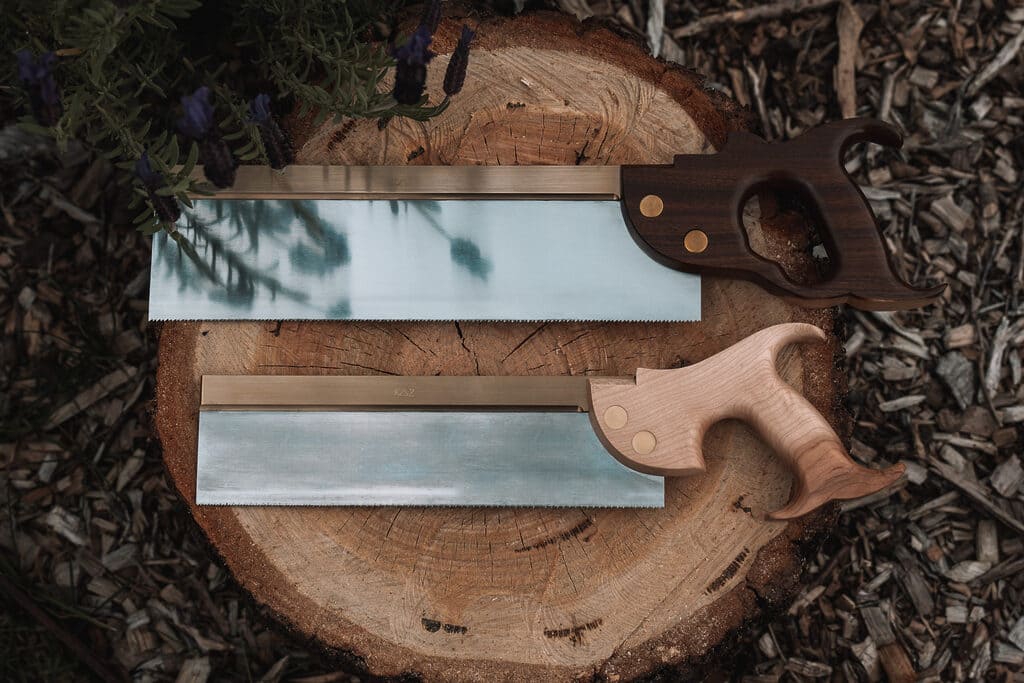
The traditional sizes run from small to large, and each step up brings a longer plate, coarser teeth and more weight. The numbers below are typical rather than rules. Makers vary them and so do I.
| Saw | Blade length | Pitch | Filing | Used for |
|---|---|---|---|---|
| Dovetail | 200 to 250mm | 14 to 20 PPI | Rip | Dovetails, small tenons, fine joinery |
| Carcass | 250 to 300mm | 12 to 14 PPI | Cross cut | Shoulders, trimming to length, squaring ends |
| Sash | 350 to 400mm | 11 to 13 PPI | Rip or cross cut | A middle size, once used for window sash joinery |
| Tenon | 350 to 450mm | 9 to 12 PPI | Rip | Tenon cheeks and other deep rip cuts |
Dovetail saw
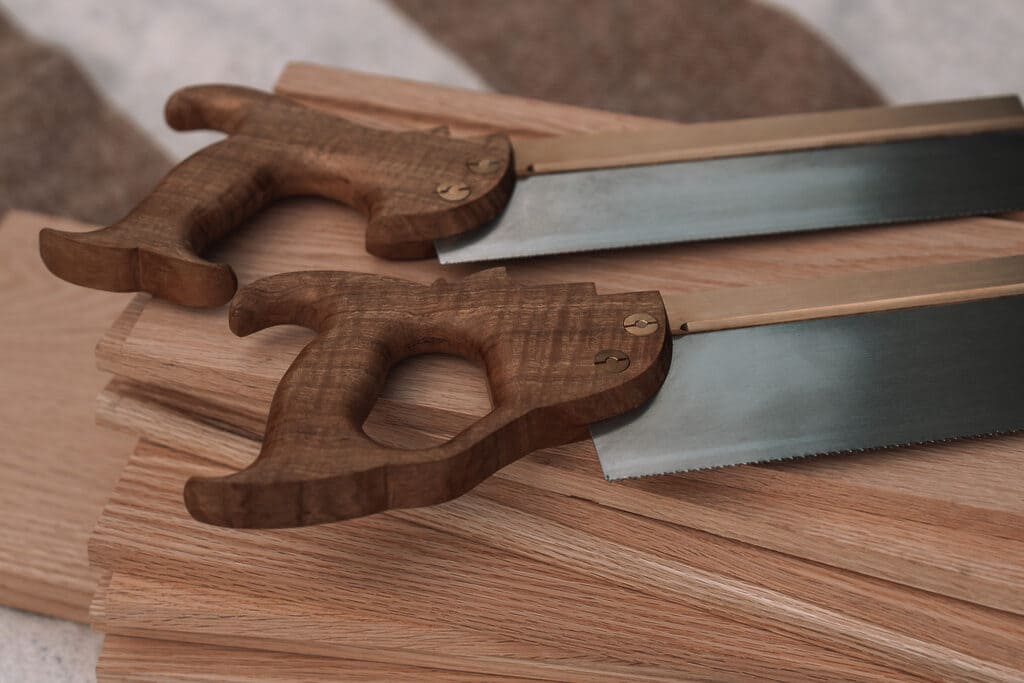
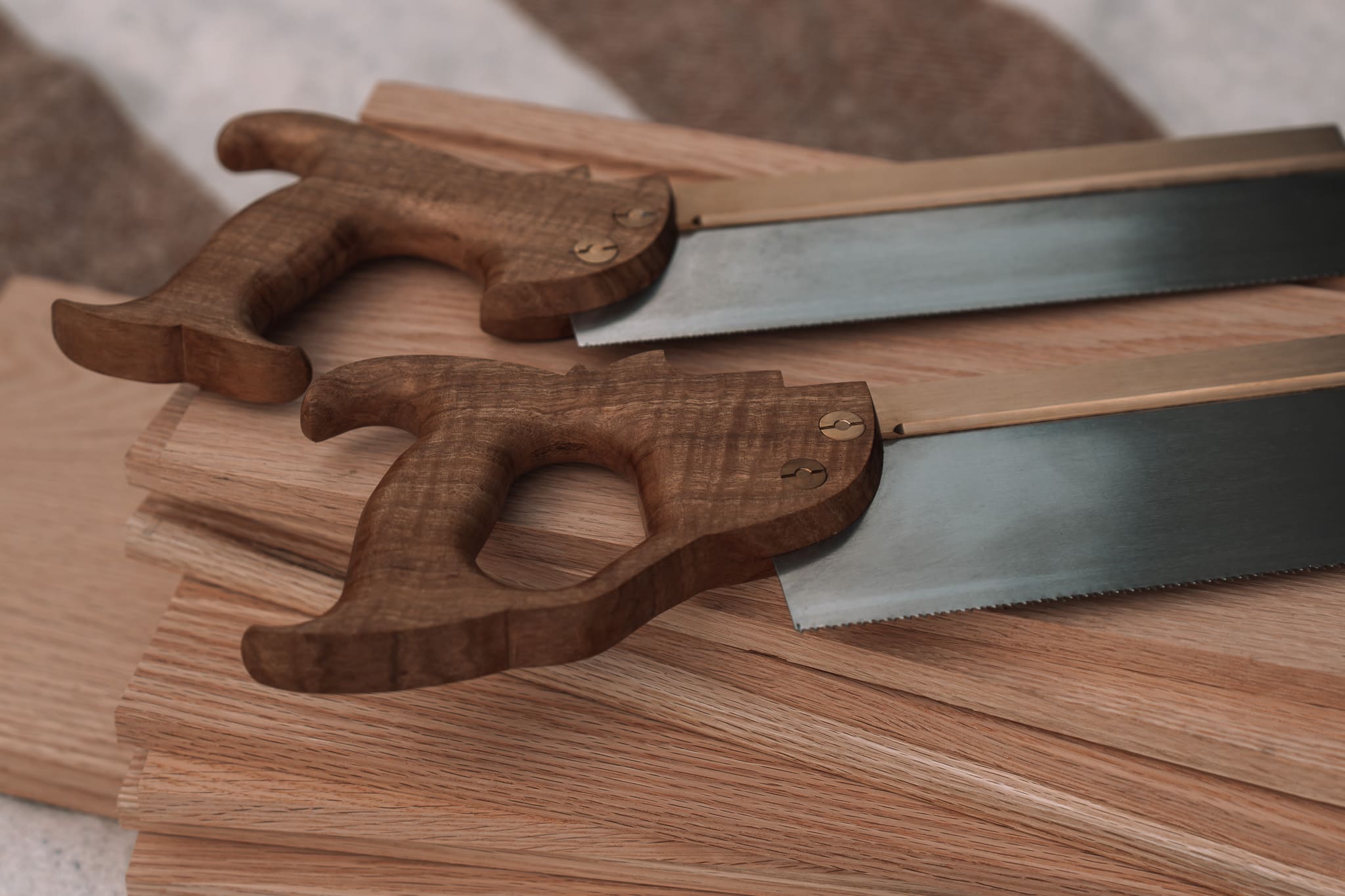
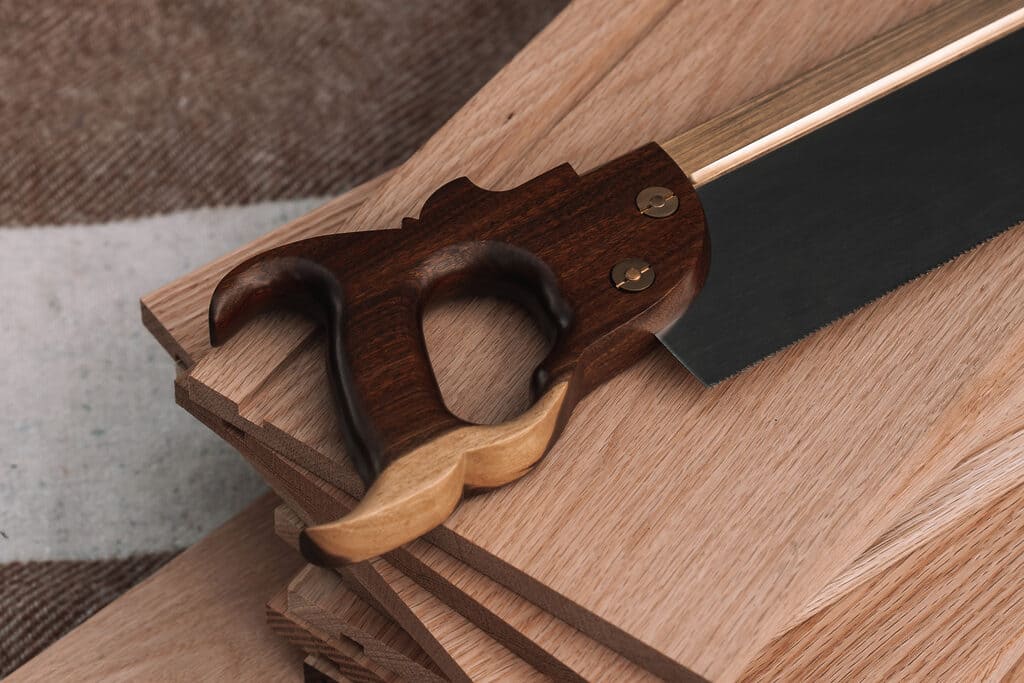
The smallest backsaw and the one to own first. A short plate, fine teeth and a rip filing, because dovetails are cut along the grain. The handle hangs steep, which keeps your wrist neutral on the short upright stroke you use to start on the end of a board. Mine have a 250mm plate at 16 points per inch with an 8 degree rake, and cut 50mm deep. That covers dovetails, small tenons and most of the joints in furniture-scale work.
Small cross cut backsaw
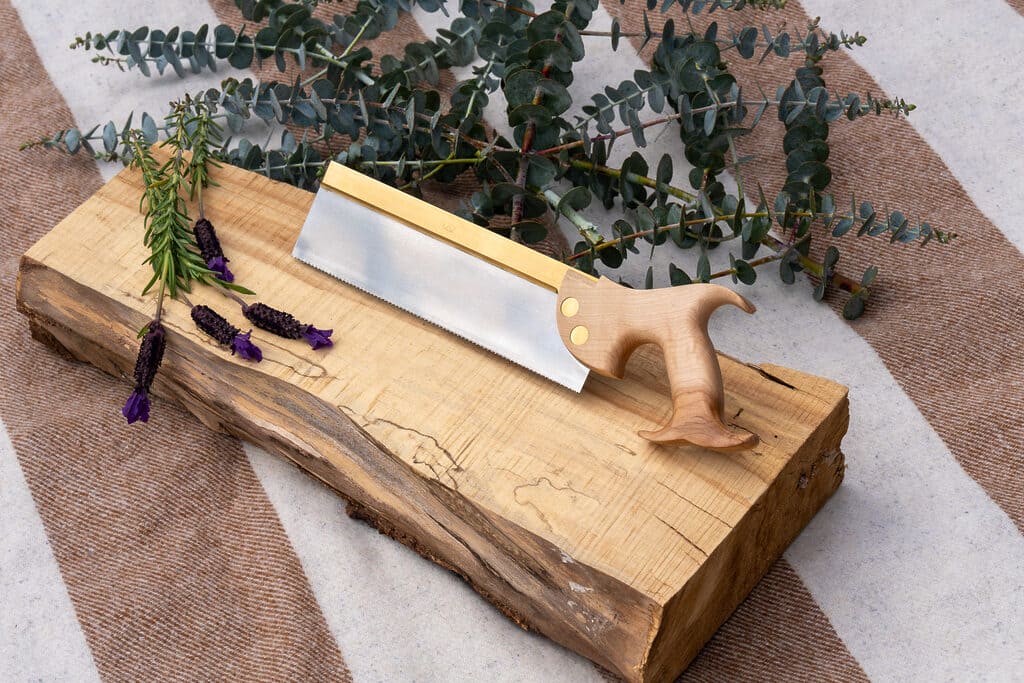
The same size as a dovetail saw, but filed cross cut, with 13 points per inch, 15 degree rake and 25 degrees of fleam. It has no traditional name. It’s the handy little saw I reach for most at the bench, whenever I need to trim a small piece to length or square an end cleanly. I make it as a commission option, and if you already own a dovetail saw it’s well worth thinking about.
Carcass saw
A carcass is the box of a piece of furniture, the sides, top and bottom, and the carcass saw was the saw for squaring and fitting those parts. It’s a little longer and heavier than a dovetail saw and filed cross cut, because the everyday bench cuts it makes, tenon shoulders and trimming to length, run across the grain. The handle hangs lower to suit a longer, flatter stroke. Mine have a 300mm plate at 13 points per inch, 15 degree rake, cross cut with 25 degrees of fleam, and cut 70mm deep. If you already own a dovetail saw, this is the natural second saw.
Tenon and sash saws
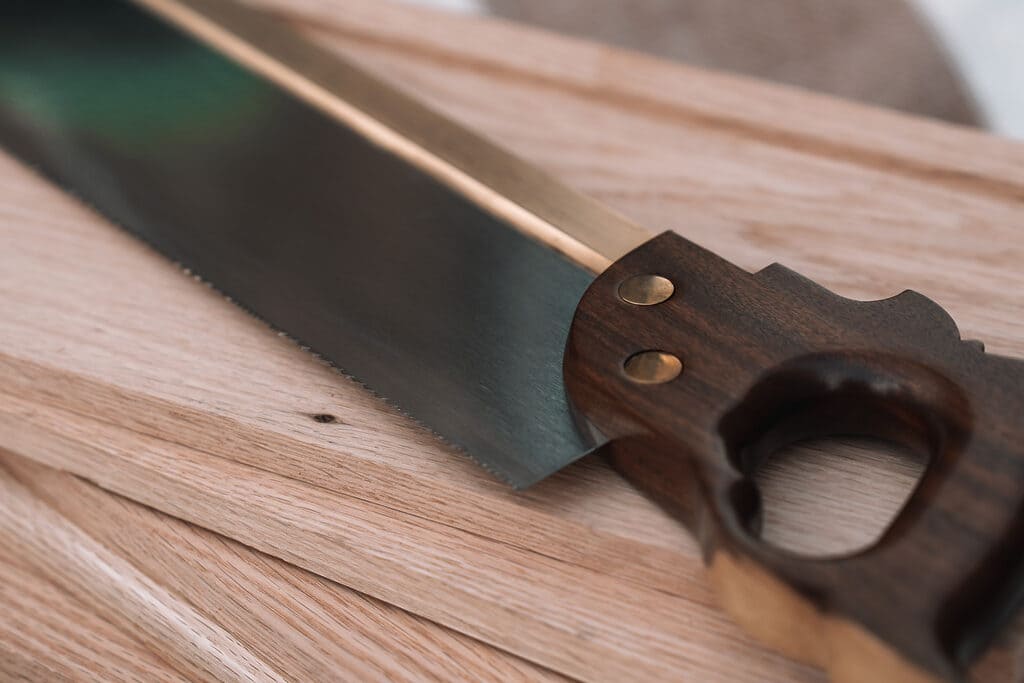
The tenon saw is the big one. A long plate, coarse rip teeth and plenty of weight in the spine, made for sawing tenon cheeks in thick stock where a dovetail saw runs out of depth. The sash saw sits between carcass and tenon and was often filed with a compromise pitch so one saw could do both jobs. You see plenty of old English tenon saws at markets, and a good one is worth restoring. I don’t make either at the moment. Dovetail and carcass cover nearly everything a furniture maker does at the bench, so that’s where I started.
Gent’s saws
A gent’s saw is a small backsaw with a straight turned handle in line with the spine, like a file handle, instead of a closed grip. They’re cheap and handy for model work, but the straight handle gives you very little control over the angle of the cut. If you’ve been struggling with one, it’s probably the saw and not you.
Handsaws and panel saws
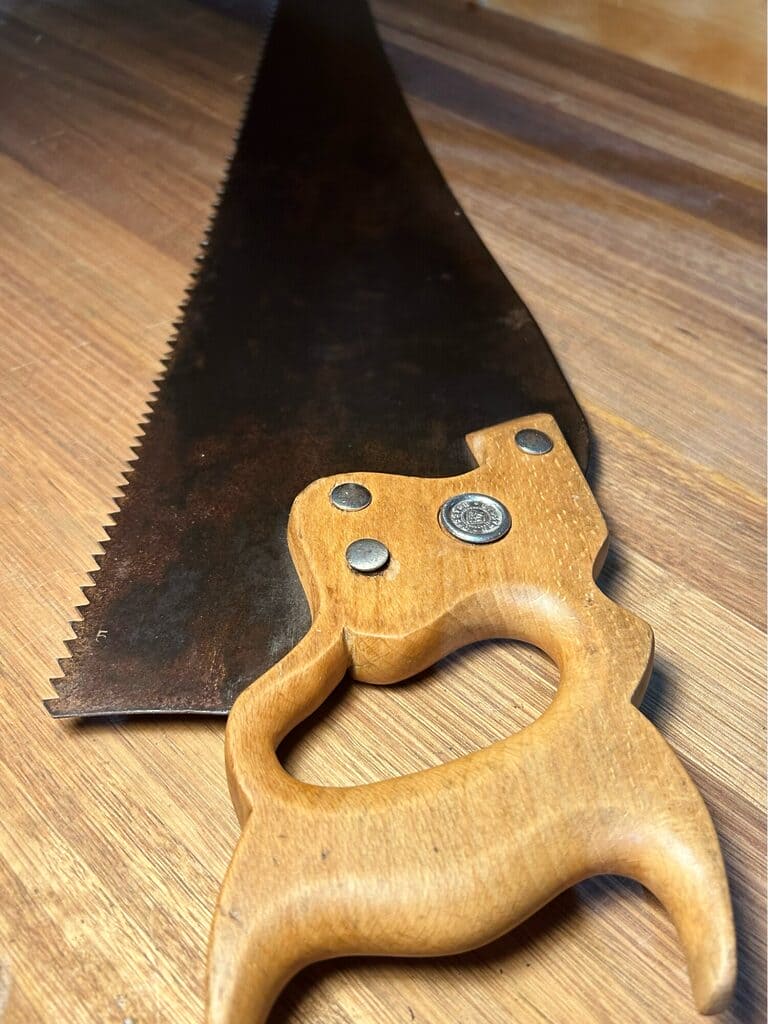
A full handsaw has a plate around 600 to 660mm long and no spine. Rip handsaws run about 5 to 7 points per inch and cut along the grain. Cross cut handsaws run 8 to 10 and cut across it. A panel saw is a shorter, thinner handsaw, around 450 to 550mm, originally for cutting thin panels and now popular because it fits in a tool chest. Old Disston and Spear and Jackson saws are common and cheap in Australia, and a sharpened one is a far better tool than a new hardpoint saw from the hardware store. Learning to sharpen a handsaw is also a good way into saw filing, because the teeth are big enough to see.
Japanese saws
Someone always asks. Japanese saws cut on the pull stroke, so the plate is under tension and can be very thin. They’re excellent, and if you own one and like it, keep using it. A Western backsaw is a different tool with a different feel: a push stroke with weight over the teeth, and a closed handle that can be fitted to your hand. Plenty of people use both, myself included.
Which one first
Dovetail saw first, then a carcass saw. Those two will get you through most joinery. Add a tenon saw when you find yourself cutting joints deeper than your dovetail saw reaches, and a handsaw or panel saw when you’re breaking down boards by hand. The saws for sale page has the current dovetail and carcass saws with full specifications, and if you want something different, that’s what commissions are for.