
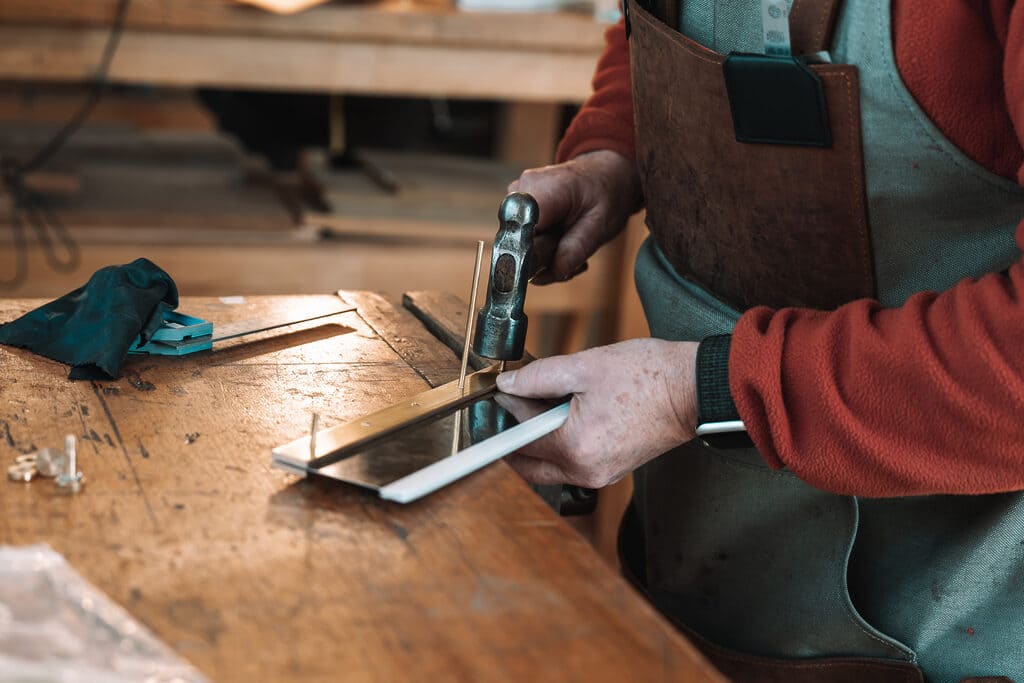
Saw care
A little care and your saw will last a lifetime
A backsaw doesn't ask for much. Keep it dry, keep it oiled and keep it sharp. Here's how I look after mine, and what to do if rust or a dull edge gets ahead of you.
Everyday care
Four small habits
None of this takes more than a minute. Most of it is a wipe with an oily rag before the saw goes back on the rack.
Storage
Keep it dry
Moisture is what starts rust. Store your saw somewhere dry, with the blade cover on when it's not in use, and out of reach of children.
Rust prevention
A wipe of camellia oil
After use, wipe the blade with a little camellia oil. Regular light coats are all it takes to keep rust away.
Handle care
Look after the timber
Clean any sawdust off the handle and wipe on some camellia oil. The same bottle does the blade and the handle. Or apply your favourite wax and buff to get that fresh smooth feel.
Blunting
Expect it to dull
Sharp things go blunt with use, and hardwoods speed that up. When the teeth are dull the cut takes longer and more strokes. A quick touch up with a needle file, before it gets bad, keeps your saw in sharp condition.
Rust removal
If rust does get in
Catch it early and it comes off in a few minutes.
01
Rub it back
Use a Klingspor Sandflex hand block, fine grade, or 1200 grit wet and dry paper. Rub the rusted area until the rust is gone.
02
Polish
Go over the cleaned surface with metal polish to protect the bare steel.
03
Oil it
Wipe on camellia oil, and keep doing it regularly. That's what stops the rust coming back.
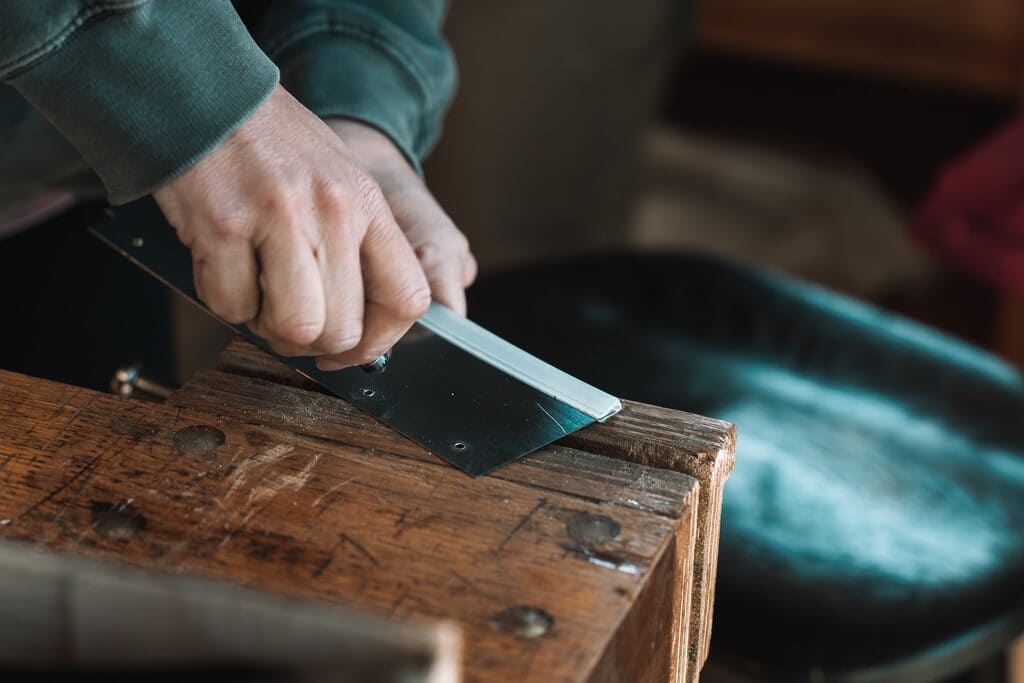
What I use
Camellia oil
Metal polish
Klingspor Sandflex hand block (fine) or 1200 grit wet and dry paper
F. Dick needle files with a file guide
A needle file and file guide go home with you from the workshop.
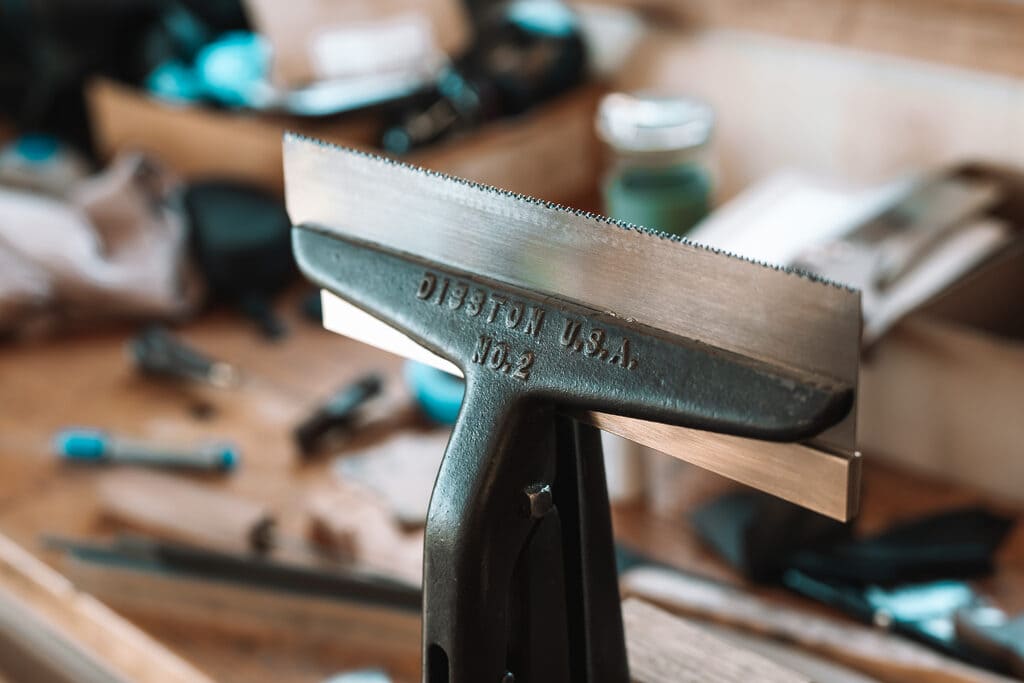
Sharpening
Keeping it sharp
You don't need to wait until a saw is properly blunt. A few light strokes with a needle file, held in a file guide, bring the edge back before cutting becomes hard work. Safety glasses and a dust mask go on first. My Disclaimer covers safe use in more detail.
That's the sharpening you learn at the workshop, and it's why you go home with a file and a guide.
If you want to understand what's happening along the tooth line, Set & File by Matt Cianci explains saw sharpening better than anything else I've read.
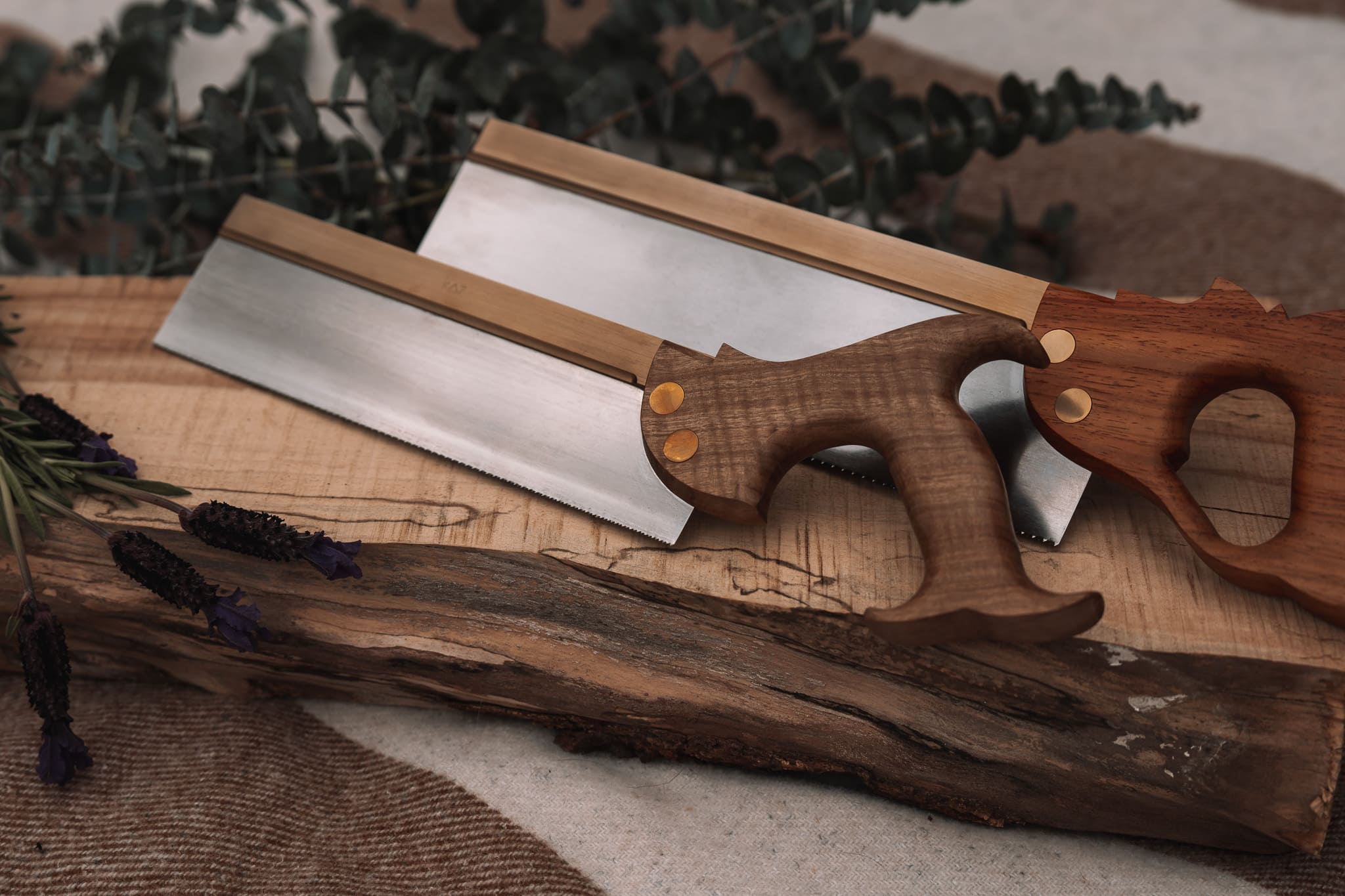
Sharpening service
When to send it back to me
If a touch up isn't bringing the edge back, or the teeth are chipped, uneven or worn down, it needs the saw vice and the retoother rather than a needle file. I'm in the process of setting up sharpening and retoothing services for backsaws.
Send me a photo of the tooth line and I'll tell you what it needs.
