
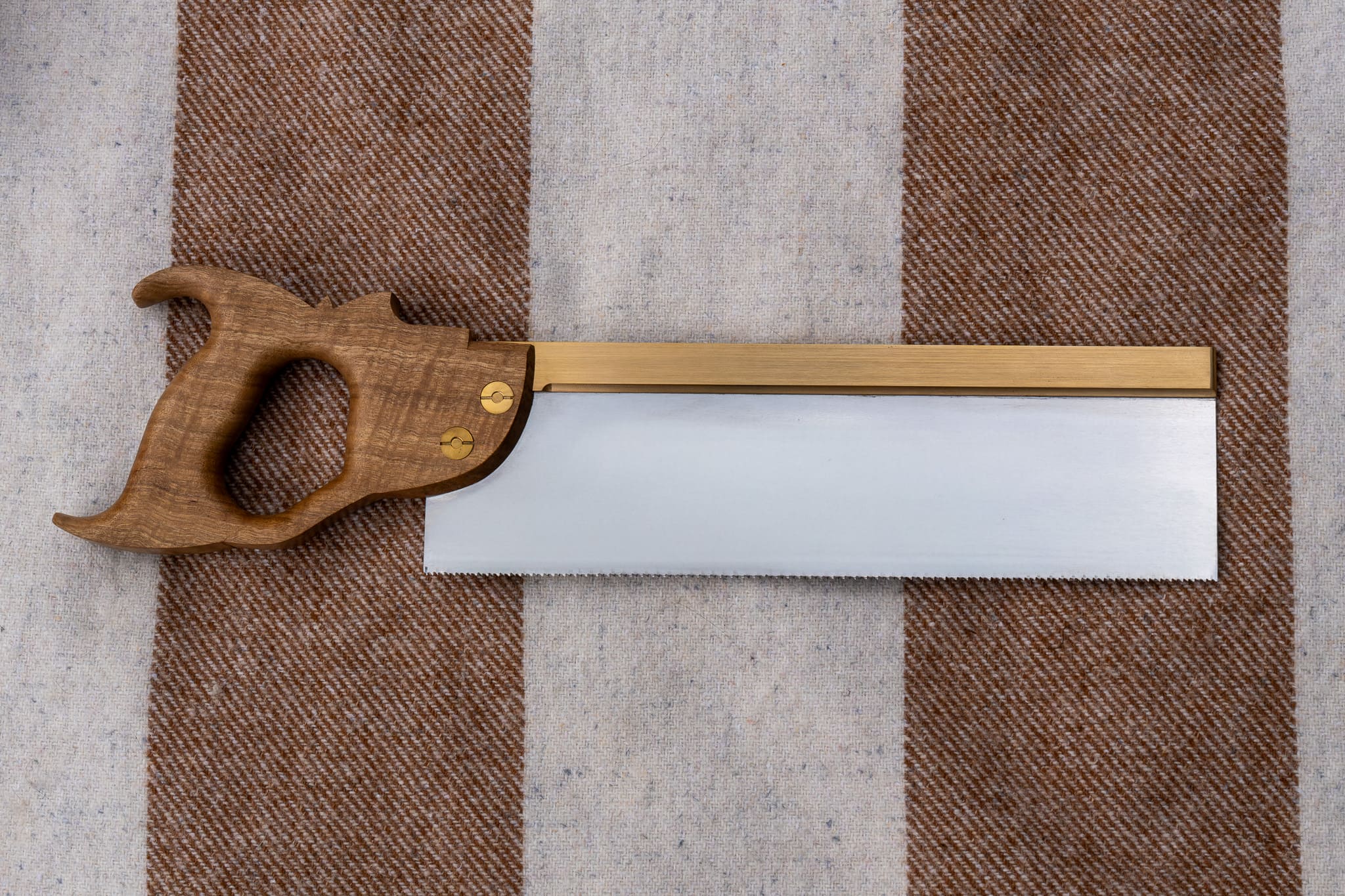
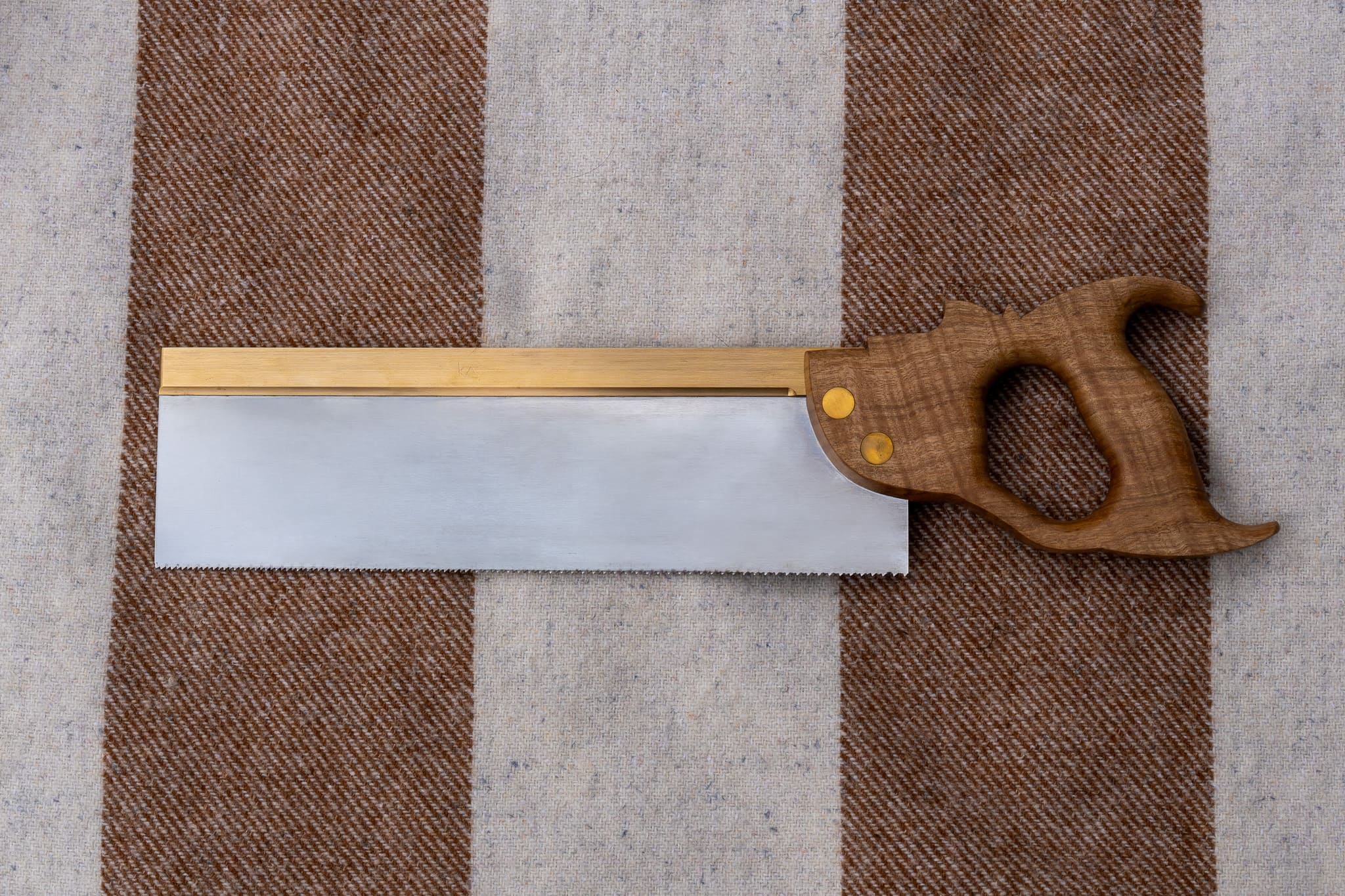
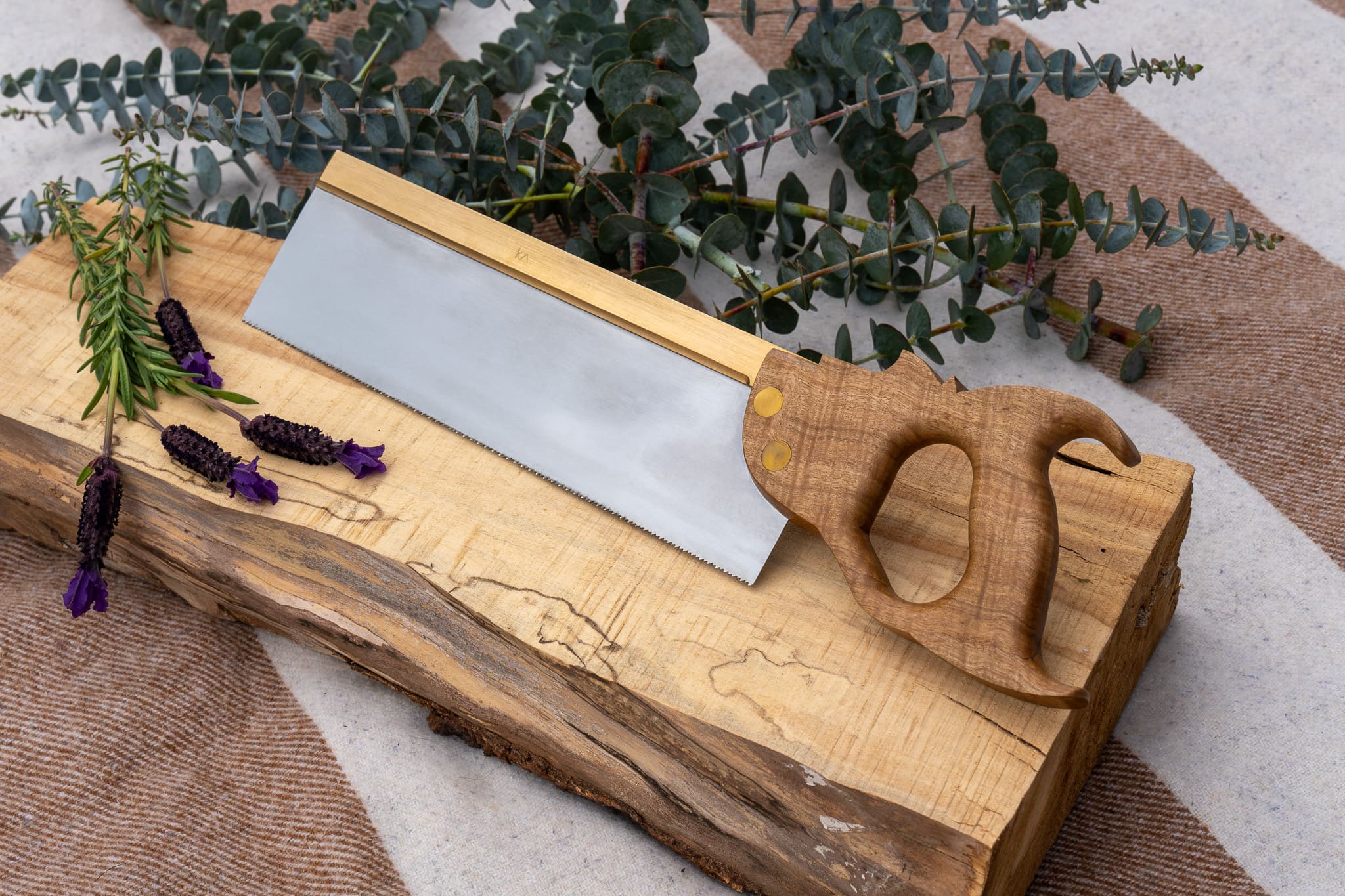
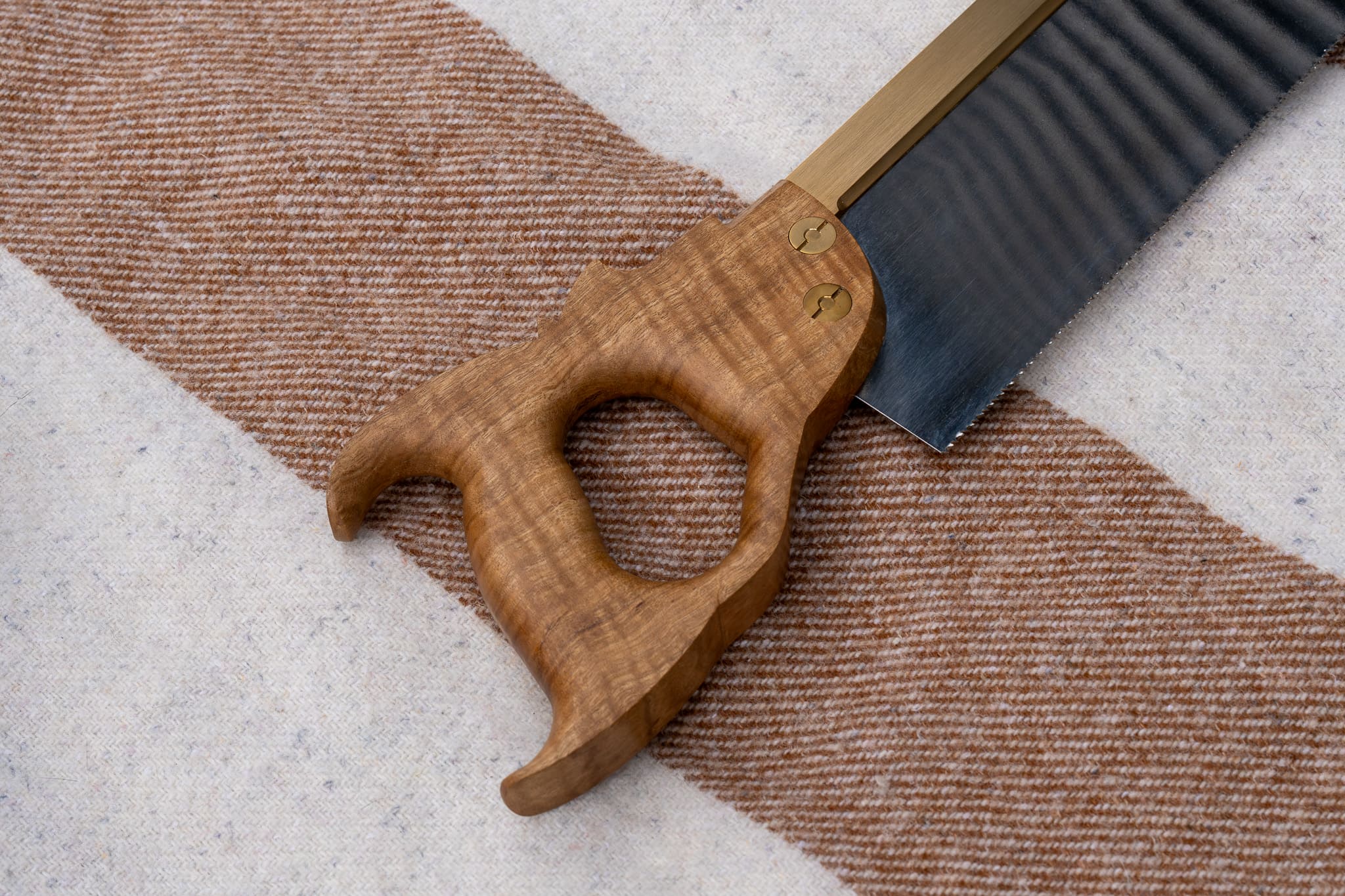
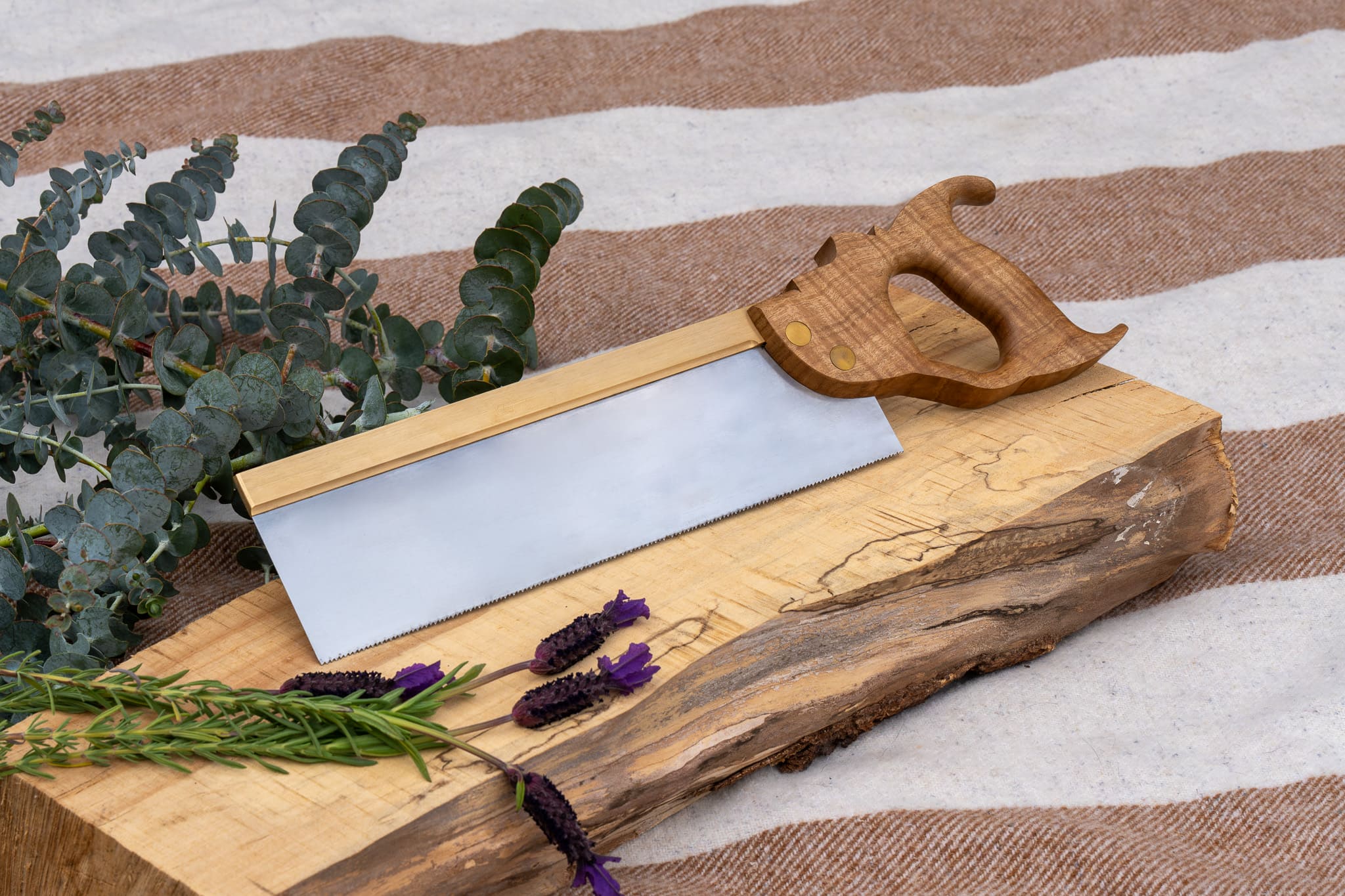
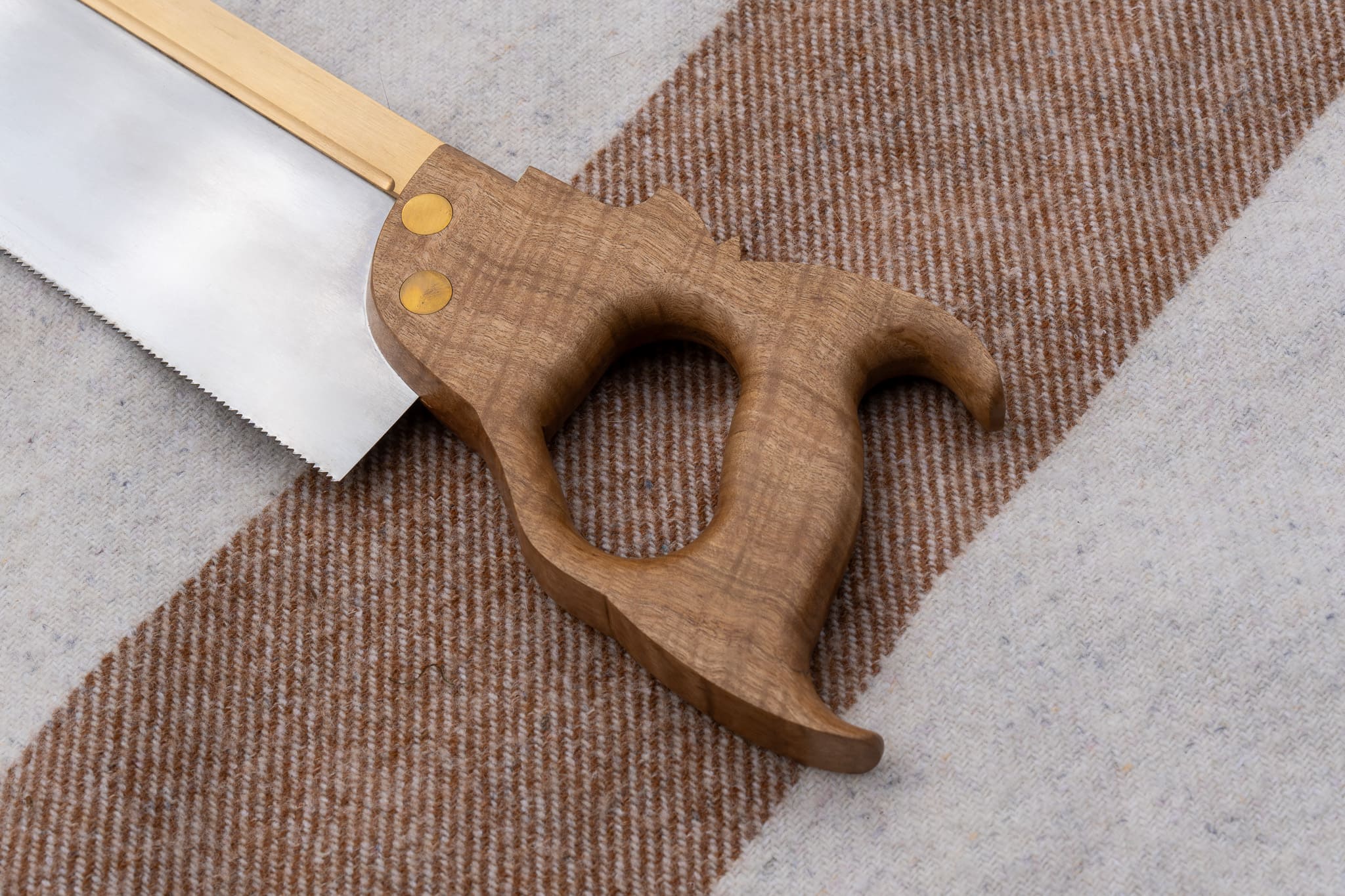
A carcass saw earns its keep on the everyday bench cuts: trimming a board to length, cutting tenon shoulders, squaring the end of a carcase side. It cuts across the grain, so the teeth are filed cross cut with 25 degrees of fleam and a 15 degree rake at 13 points per inch. That leaves a tidy edge on end grain instead of tearing it. The blade is 300mm long and cuts to 70mm deep, a good deal more reach than my dovetail saw, and at 543 grams this is the heaviest saw in the batch. Most of that weight is the solid brass spine, which keeps the 0.5mm spring steel blade (SAE 1080, 44 to 47 HRC) straight and lets it sink through the cut under its own weight.
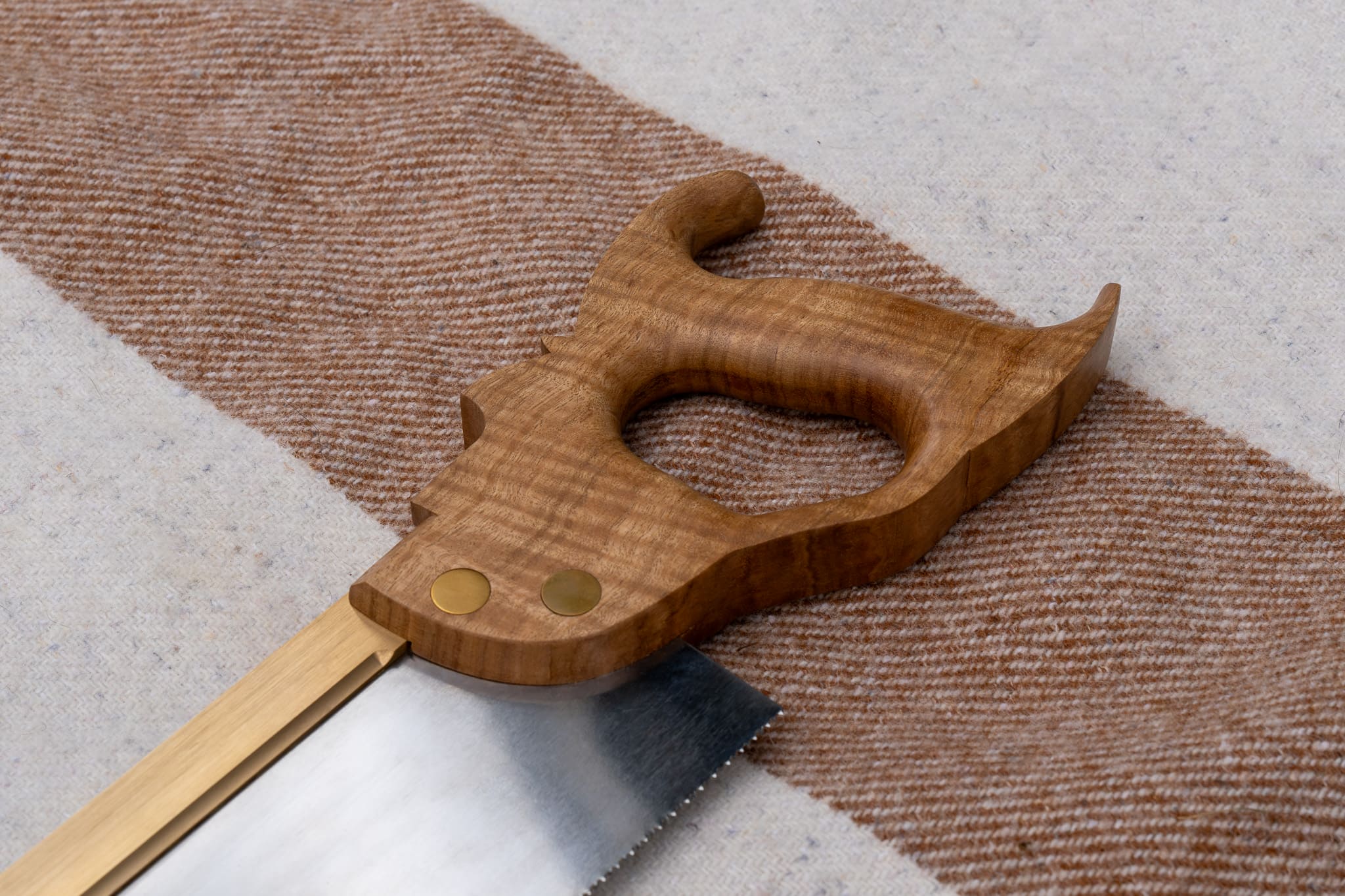
The handle sits at a lower hang angle than the dovetail saw, 23 degrees against 41, which lines your forearm up behind a longer, flatter stroke. It’s shaped from Spotted Gum, a dense Australian hardwood that takes a beating and comes up with a deep, warm colour under oil. This one is sized for a large hand, a palm around 95mm across. Point your index finger along the spine, curl the other three around the grip, and it should feel like the handle was made for your hand.
This is one of my first small batch of saws. The brass spine was made at HNT Gordon, where Terry Gordon taught me a good deal of what I know about tool making, and I make the split nuts myself using the techniques I learned in his workshop. These saws mark where Kaz Saw began. Once they’re gone, that’s it for this batch.
The saw comes sharpened and ready to work. Email me to buy it and I’ll post it anywhere in Australia by registered mail.
